

RESEARCH

CHAIR OF IMMIGRATION

ABOUT US

The Chair of Immigration is a department with a research vocation that began its development at the Universidad Francisco de Vitoria in the academic year 2006/2007. As a result of the experience of participating in a European project “EQUAL Profís”, the need for research on the challenges and foundations of social integration of people of immigrant origin was identified.

During the first ten years of the Chair’s existence, research projects have been carried out on the reality of immigrants in Spain in terms of labor, family, media, anthropological and religious dimensions, social entrepreneurship, the reality of immigrant women, the training factor and, in recent years, there has been an in-depth reflection on the challenges faced by refugees.

This department has organized a master’s degree in Migration and Development, several international congresses, workshops with groups of experts, conferences, etc. In addition, it collaborates with various undergraduate and graduate training initiatives, both on and off campus. We attend international and national congresses, collaborate with the media and have published a trilingual glossary on integration, as well as books and scientific articles.

In the academic year 2020/21 the Chair obtained funding for the realization of a competitive project of the call for applications for grants for the promotion of scientific, technological and Innovation culture in the 2019 edition entitled “Construyendo una nueva narrativa migrante a golpe de tuit” (Constructing a new migrant narrative through tweets), with reference FCT-19-15454.

LCurrently, the Chair depends on the Center for the Global Common Good, which is a think tank promoted by the UFV’s Faculty of Law, Business, and Government.

Imagen1 1 CHAIR OF IMMIGRATION Estudiar en Universidad Privada Madrid

We are inspired by the thought and values of the humanist Francisco de Vitoria and the principles of the Social Doctrine of the Catholic Church, especially in:

  • The defense of the dignity of every human being as the center of society
  • The universality of human rights
Imagen2 1 225x300 CHAIR OF IMMIGRATION Estudiar en Universidad Privada Madrid

We want the Universidad Francisco de Vitoria to be recognized for its commitment to immigrants through a research department that is rigorous in its approach and expert in the humanistic foundations that defend the equal dignity of all people and the need for social inclusion of every human being.

Imagen3 1 300x158 CHAIR OF IMMIGRATION Estudiar en Universidad Privada Madrid

Our mission revolves around research on the migratory reality in Spain and on different aspects that favor bidirectional integration.

The general aim is to offer a space for research, training and dissemination to contribute to the social integration of immigrants in Spain. The specific aims of the Chair are the following:

  • To research and rigorously analyze the fundamentals of the social integration of immigrants and other relevant aspects of the reality of migration and refugees in Spain.
  • To train. To offer spaces and training itineraries to the agents who work with immigrants, giving courses, workshops, meetings and high level training (postgraduate, master’s, specializations…).
  • To disseminate. To publish the most significant results of the research we carry out in national and international impact journals.
  • To participate in conferences and other important national and international events on migration issues to renew knowledge and share experience.
Imagen4 300x158 CHAIR OF IMMIGRATION Estudiar en Universidad Privada Madrid

LINES OF RESEARCH

SOCIAL INTEGRATION AND RURAL REPOPULATION

According to the EU, social integration requires a bidirectional path to be followed by both the migrant and the people of the receiving country. In this staging of human relations, it is possible to produce an encounter that enriches both and makes possible a peaceful coexistence where all people build their life project and are jointly responsible for the common good.

Since its inception, the Chair of Immigration has focused on integration as a crucial issue of the migratory question and, in recent years, we have been analyzing it in the context of the rural world, in what we call “empty Spain” or “depopulated Spain”. There we have initiated a real project of applied research, Habita Tierra, where different families are starting their project of settling in new towns. It is probably not the definitive solution, but it does seem to be a life option with many positive points for the people and the territory.

MIGRATORY NARRATIVES

This line of research analyzes how language related to migration is used in different media, written, audiovisual and social networks. We have conducted analyses of migration narratives in electoral elections, in the world of fiction series, in social networks and in the cinema. We have also carried out awareness-raising workshops on the subject with the help of a Guide that we have edited for an appropriate use of narratives that puts the dignity of every human being at the center and enables spaces of encounter and not of social exclusion

PROJECTS

The Chair of Immigration, in collaboration with the Altius Foundation, is promoting the Habita Tierra project, a rural integration and sustainability initiative based on an innovative model of sustainable repopulation, centered on the individual and adapted to the characteristics of each rural environment.

The project seeks to settle immigrant families in depopulated municipalities, offering them adequate housing and lasting employment, thus fostering new cohesive rural communities. It also has an applied research approach, combining real action with academic study on rural integration

Designed in 2021 by the Universidad Francisco de Vitoria, it began its implementation in February 2022 in the province of Avila, with the arrival of four families in the municipality of El Losar del Barco. Currently, six families are participating and others are in the process of being selected. The project has achieved significant advances in employment, business creation and population growth, contributing to the social cohesion and economic development of the region.

Since its implementation, the project has achieved the following key results:

  • Direct jobs generated: 12 jobs.
  • Businesses in operation: 3 bars have opened thanks to the increase in population.
  • In small municipalities, the population has increased between 5% and 10% thanks to the arrival of these families.
  • Displaced people: A total of 40 people (25 belonging to 6 families of the project and 15 additional ones who arrived by affinity or kinship) have been transferred to the province of Avila, highlighting the integration of 13 minor children, who have been enrolled in rural schools, contributing to the maintenance of at least 3 schools

Each person is unique and unrepeatable. Recognizing that we are different makes us wonder and respect the diversity of each one of us who are part of the UFV family.

A diVerse Family is a reality that enriches us for all that each one can contribute with his or her talents and personality. A diVerse Family is also expressed in the different nationalities that live together on the UFV campus. In 2017 a total of 32 nations are living together among students, staff and faculty (Angola, Argentina, Belgium, Bolivia, Brazil, Chile, China, Colombia, Costa Rica, Cuba, Dominican Republic, Ecuador, El Salvador, Equatorial Guinea, France, Germany, Guam, Guatemala, Honduras, Italy, Mexico, Nigeria, Panama, Paraguay, Peru, Poland, Portugal, Romania, Russia, United States, Venezuela and Spain)

The mission aim of “Overcoming evil with good” is carried out by each of the 12,000 people who participate in this University, in a diverse way, each with a different commitment, different ways of seeing reality, different cultures and nations.

Within the framework of the celebration of the 10th anniversary of the Immigration Chair of the Francisco de Vitoria University, we have conducted a total of 16 interviews with students, staff and professors of foreign nationality in order to produce a video called “A Diverse Family” to publicize the different cultures that make up the UFV Family, a big family where everyone brings their talent and experience to build a better society.

ACADEMIC PUBLISHINGS

foto glosario CHAIR OF IMMIGRATION Estudiar en Universidad Privada Madrid

GLOSSARY OF TERMS FOR INTEGRATION

Abstract:

This glossary is the result of a joint work of the components of the transnational E – Qual project Meeting Point: Profis (Spain), Geforme (France), Creuse ́ac (France – Creuse), Gente Acolhedora (Portugal) and NZTPD (Slovakia) under the direction of the Profis group (Project for Training and Social Integration). Some of the terms that are defined are: welcoming, adaptation, contribution to society, asylum, assimilation, citizen…

Technical data:

Editors: Miguel Osorio García de Oteyza; Joaquín Saldaña Cebello; Profís/UFV Social Foundation.

D.L M27420 – 2007.

catedra inmigracion retos integracion 200x218 1 CHAIR OF IMMIGRATION Estudiar en Universidad Privada Madrid

INTEGRATION CHALLENGES. II STUDY ON THE INTEGRATION OF IMMIGRANTS IN THE REGION OF MADRID.

Abstract:

In the Region of Madrid immigrants are integrating well, as evidenced by their high rate of employment and their high level of satisfaction.

Technical data:

Coordinated by: Chair of Inmigration. Universidad Francisco de Vitoria.

Subsidized by: Directorate General for Immigration; Regional Ministry of Immigration and Cooperation, Region of Madrid.

n collaboration with: eQual Profís Project, co-financed by the European Social Fund and the Regional Ministry of Family and Social Affairs of the Region of Madrid.

D.L: M.6106 – 2008.

catedra inmigracion dimension religiosa 200x218 1 CHAIR OF IMMIGRATION Estudiar en Universidad Privada Madrid

PERSONAL DIMENSION OF INTEGRATION

Abstract:

Conversations on Integration (Conversaciones sobre Integración) are meetings that bring together experts on this subject, motivated by the social events that are taking place in Spain as a result of the massive arrival of immigrants. It aims to encourage participation and research into proposals that help to share and harmoniously promote the thinking and coexistence of those who will shape the history of our present and future society.

This book contains various papers, including: José – Román Flecha Andrés (Universidad Pontificia de Salamanca), Rosalía Portela Rico (Cáritas Madrid), Luis González – Carvajal Santabárbara, SJ (Universidad Pontificia de Comillas),…

Technical data:

D.L: M.41838 – 2007

catedra inmigracion integracion inmigracion 200x218 1 CHAIR OF IMMIGRATION Estudiar en Universidad Privada Madrid

RELIGIOUS DIMENSION OF INTEGRATION

Abstract:

The aim of this study is to obtain an adequate knowledge of the problems and points of view of the immigrant population of the Community of Madrid. Some of the results obtained in this study reflected the following:

  • Economic motivations are fundamental.
  • The choice of Spain as a destination is encompassed in: geographical proximity, contacts with relatives and/or friends, language, amenitiesand abundance of work.
  • 11% of the immigrants went to another European country before arriving in Spain.
  • 43.2% said they would stay in Spain for a while and then return to their country of origin.
  • 51% think that their expectations have been fulfilled.
  • 80.4% have improved their standard of living.

Technical data:

D.L: M.6106-2008

catedra inmigracion emprendedores 200x218 1 CHAIR OF IMMIGRATION Estudiar en Universidad Privada Madrid

ENTREPRENEURIAL IMMIGRANTS IN TIMES OF CRISIS

Abstract:

The assessment made about the contribution of the three million foreign workers (14% of the total workers in Spain) to our economy was that this has been very positive in terms of stimulating consumption, for maintaining traditional trades and services which are no longer so attractive to the natives, the flexibilization of the labor market, the support for the reconciliation between work and family, the growth of the GDP,…But with the evidence of the negative effects of the economic crisis that Spain has been experiencing, especially since 2007, this group is suffering, in addition to an unemployment rate of 21%, a worse recognition and even rejection

Technical data:

D.L: M-49726-2010

ACTIVITIES

On May 14, the Universidad Francisco de Vitoria (UFV) held the event “Rural Revolution” on its campus, a meeting dedicated to analyzing the challenges facing the rural environment in Spain, with special attention to the depopulation affecting more than 4,000 municipalities in the country. The event brought together students, teachers, mayors and political representatives, and served as a space for reflection, debate and proposed solutions to revitalize rural areas.

During the day, key issues such as the sustainability of agricultural and livestock farms, the lack of infrastructure and basic services, and the growing gap between rural and urban areas in terms of access to healthcare, education, mobility, digital and social services were addressed.

One of the central moments of the event was the intervention of representatives of the Community of Madrid, who presented various actions included in the Plan for Territorial Rebalancing and Fight against Depopulation, a strategy led by Javier Carazo, general director of Territorial Rebalancing. Among the more than one hundred measures proposed, the expansion of the Mobile Citizen Assistance Office, improvements in the cab service to facilitate travel in small towns, a new housing plan for towns with less than 20,000 inhabitants and specific aid to boost rural commerce and the hotel and catering industry stand out.

It was also announced the expansion of the “Cuídame” program, aimed at providing comprehensive care to the elderly in municipalities with less than 250 inhabitants, with the aim of improving their quality of life and access to health services.

The event included round tables and workshops that promoted dialogue between different rural stakeholders, fostering a collaborative approach to designing a viable and attractive future in these areas. Special emphasis was placed on the need to balance rural and urban development, and on the importance of making the countryside a real alternative for living, working and entrepreneurship.

This forum not only served as a space for the exchange of ideas and experiences, but also as a call for collective action. In this sense, the UFV Chair of Immigration will continue to promote initiatives and spaces for dialogue that support the transformation of the rural environment, with the aim of building a more just, cohesive and sustainable country for all its inhabitants.

Imagen12 CHAIR OF IMMIGRATION Estudiar en Universidad Privada Madrid

The Chair of Immigration together with the Center for the Global Common Good of the Universidad Francisco de Vitoria organized on April 2, 2025 a Rural Conference in Fontiveros (Ávila), in which we had as speakers Luis Antonio Calderón (President of Siembra and Mayor of Paredes de Nava), David Sánchez Tenrero (Mayor of Fontiveros), Jaime Igea (President of the Talento 58 Foundation), Ignacio Cosidó (Director of the Center for the Global Common Good of the UFV) and Jesús Martín (Vice President of the Provincial Council of Ávila) and Miguel Osorio (Director of the Chair of Immigration at the UFV).

Through their testimony and experience we were able to get a first-hand understanding of the problem facing Spain in the face of depopulation and the aging of society. They referred to the need for the rural world to undergo a transformation, to offer employment opportunities and for there to be more investment, more installation of business projects. A continuous development of the city is not sustainable without the rural world having economic activity, labor and people who bet on it.

Our speakers were able to show us that the rural world has more spacious and more economical housing than the city. Spain is experiencing an overpopulation of its cities, which makes it difficult for families to educate their children in free and safe environments, where they can develop in outdoor spaces, with free time and leisure with other children. Villages in Spain offer an education that is more focused on the needs of each child, since the number of students is much smaller. The rural environment is ideal for family life and work-family reconciliation.

Jaime Igea emphasized all the wasted talent of those migrant professionals who arrive in Spain and cannot exercise their learned knowledge. It is important to make room for this talent in this country, as it would mean a great enrichment of the Spanish labor force. He also made us see that in northern European countries this migration to the cities does not happen as it does here, but that there is a culture of rootedness in the places where people are born. We must reinforce a culture where the question of what we can contribute or give back to the places where many were raised is present.

Luis Antonio Calderón told us about his positive experience of welcoming Ukrainian refugees and other people in the town of Paredes de Nava, of which he is mayor, and which meant a growth of 200 inhabitants for his town. He told us that a possible method to face depopulation in a more organized way would be the creation of dynamic offices for depopulation in all the autonomous communities, which would be connected with the depopulation offices of the town councils, so that there would be a joint action for this issue. We were struck by his statement that culture is built in the villages and destroyed in the city. Villages are places where meaning and identity are generated.

Jesús Martín shared that there is a great desire that people can go to live in the villages, and for this, Regions, in this case we learned about the opportunities offered by Castilla y León, are carrying out different policies of financing or subsidizing companies, projects, local initiatives for those who wish to invest in the rural world. On the other hand, we were able to talk with him about immigration as a possible answer to depopulation. We were able to hear stories of families with a lot of need and talent who were able to get ahead by moving to towns in Spain and who have borne real fruit in the villages where they now live.

Miguel Osorio was able to relate the work of accompanied repopulation that Habita Tierra does together with the Altius Foundation on behalf of the Universidad Francisco de Vitoria. The greatest difficulty faced by the project is the challenge of housing, as there is very little rental supply and few houses for sale. There is a great distrust on the part of property owners to make their properties available to meet the needs of the new population. However, the project has already settled 6 families in the rural world, all of whom have housing and jobs and have successfully moved forward with their families. David Sánchez, mayor of Fontiveros, in response to a question from the students about the specific work of the mayors, answered that the mayor is a figure who performs all kinds of functions, since his role is to be there for the people, and that can even include fixing an old lady’s television set. The mayor serves the people. Today the greatest effort is to make the villages a place of comfort, services and leisure, also for the young people. After the pleasant meal we shared, David and Kariusi told us their impressive testimony of their struggle as a migrant family. They left Venezuela and went through Chile, Peru, until they arrived in Madrid, where they got to know the project of the Universidad Francisco de Vitoria, Habita Tierra, which resulted in their moving to live in Herreros de Suso. Now they have just bought their first house in Fontiveros. They told us that the rural world is worthwhile and that it has allowed them to give their children a better education and quality of life. The students showed their admiration for their capacity for struggle and perseverance.

COLLABORATIONS

The UFV Chair of Immigration promotes the integration of migrant families in rural areas with the support of “la Caixa” Foundation

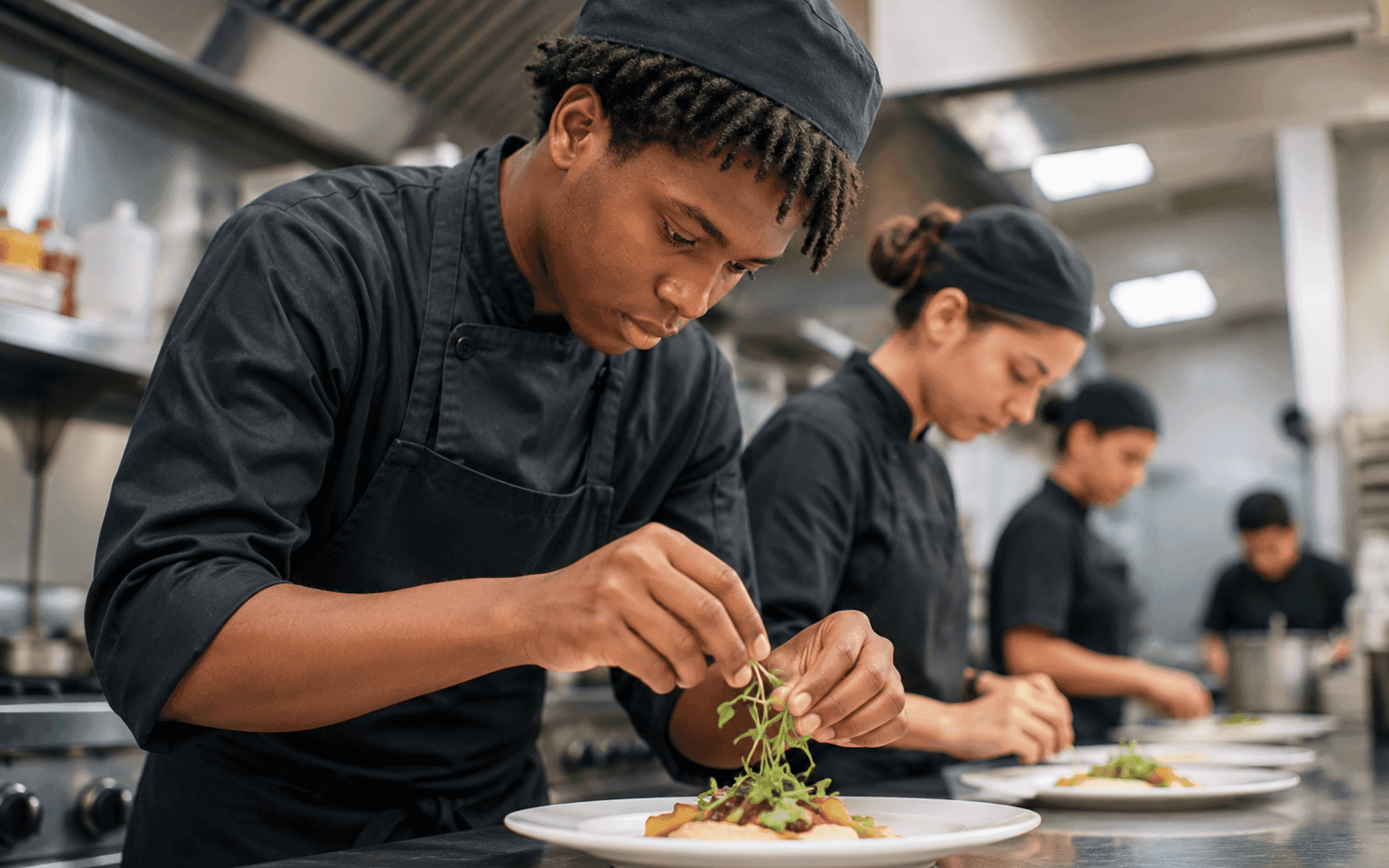
The UFV Chair of Immigration promotes the integration of migrant families in rural areas with the support of “la Caixa” Foundation. The Chair of Immigration of the Francisco de Vitoria University (UFV) is developing during 2025 a set of actions aimed at promoting the integration of migrant families in depopulated rural areas with the support of the “la Caixa” Foundation. The project, entitled “Social integration and rural revitalization through the catering sector”, seeks to take advantage of the employment and entrepreneurial opportunities offered by the hotel and catering industry in villages, with the aim of settling the population, strengthening community life and promoting intercultural coexistence.

The initiative is part of the Chair’s line of work, which has been researching integration processes between migrant and native populations in Spain for more than twenty years. Thanks to the previous experience of three years of work in the province of Avila, the UFV has successfully integrated five migrant families in local catering businesses, generating stable employment and social fabric in municipalities at risk of depopulation. With the support of the “la Caixa” Foundation, the project will expand its scope in 2025 with the aim of consolidating the social and labor inclusion of 50 migrants. The Altius Foundation, a collaborating entity of the initiative, will contribute its experience in social and labor insertion and personalized accompaniment of people in vulnerable situations.

In addition to the economic impact, the project pursues a profound social impact: to strengthen the role of the restaurant as a space for meeting, integration and community cohesion. As pointed out in the study “The Social Dimension of the Hospitality Industry. Convivencia y ciudadanía” (Asociación de directores y gerentes de Servicios Sociales, 2022), the closure of bars and restaurants in rural areas not only affects employment, but also social life and the sense of belonging of the neighbors.

Among the dissemination activities of the project, in addition to the information on the website of the Universidad Francisco de Vitoria, several visits to the project have been made with students and teachers where the testimonies of participating families, mayors and rural dynamizers have been known (photos attached).

According to Miguel Osorio, director of the UFV Chair of Immigration,

“This project shows that integration is not only possible, but can become a shared opportunity: migrant families find a decent future, and the villages recover life and hope” The UFV Chair of Immigration thus reaffirms its commitment to social innovation and sustainable human development, promoting alliances between academia, the business fabric and third sector organizations.

images 1 CHAIR OF IMMIGRATION Estudiar en Universidad Privada Madrid
%name CHAIR OF IMMIGRATION Estudiar en Universidad Privada Madrid

CONTACT

WhatsApp +34 661 429 106

Miguel Osorio 161x161 1 150x150 CHAIR OF IMMIGRATION Estudiar en Universidad Privada Madrid

MIGUEL OSORIO GARCÍA DE OTEYZA

Miguel osorio García de Oteyza is the director of the Chair of Immigration. PhD in Humanities and Social Sciences (Universidad Francisco de Vitoria) and Degree in Law (Universidad Complutense de Madrid). He has a six-year period of research and is accredited as a Associate Professor collaborating in teaching on issues of immigration and civil society. He has directed master’s degrees and courses, and has lectured at national and international forums and conferences.

m.osorio@ufv.es

Ext.2172