55 awards at 52 festivals. That’s the track record of Cara de cona, the latest short film by Guillermo de Oliveira, an alumnus of the Bachelor's Degree in Audiovisual Communication at Francisco de Vitoria University (UFV), since its premiere in March 2026.
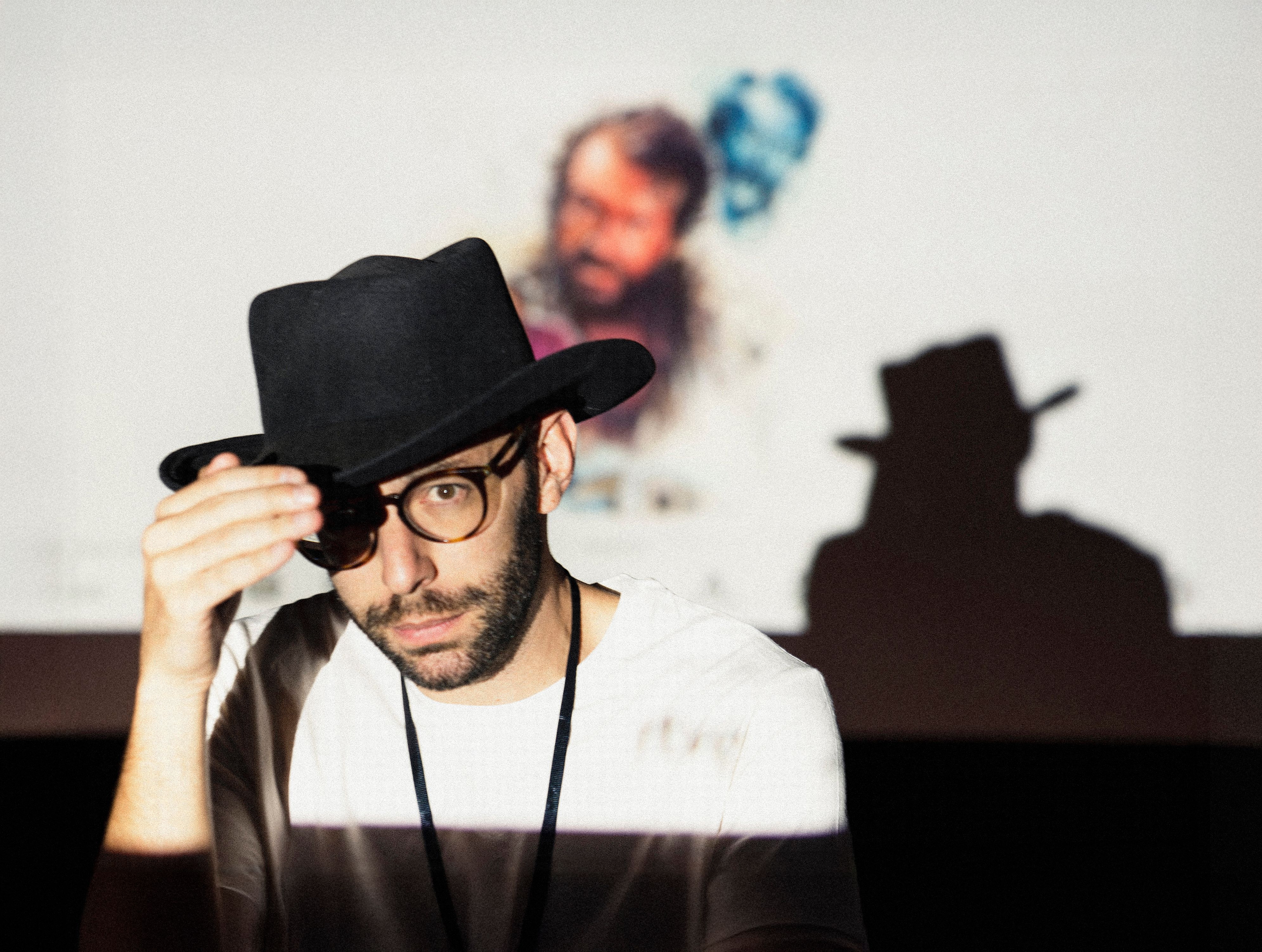
His most recent accolade—the 10th REPSOL-CTNEGRA Short Film Award at Cartagena Negra—once again puts the filmmaker on track for the top honors in Spanish cinema. The film stood out among more than 250 submitted short films, and since Cartagena Negra is part of the qualifying festival circuit, it is now in the running for a nomination at the 41st edition of the Goya Awards.
This new milestone adds to a professional career spanning more than two decades in directing, screenwriting, and production, linking the talent that has emerged from the classrooms of the UFV School of Communication with some of the most prestigious platforms in the audiovisual industry.
A track record recognized by the industry
De Oliveira completed his studies in Audiovisual Communication at UFV in 2009. Since then, his career has been marked by an exploration of various film genres and styles and by a view of learning as an ongoing part of the craft.
One of the major turning points came with Desenterrando Sad Hill, his first feature-length documentary, which chronicled the restoration of the cemetery built in Burgos for the filming of The Good, the Bad, and the Ugly. The film, featuring interviews with figures such as Clint Eastwood, Ennio Morricone, James Hetfield, Joe Dante, and Álex de la Iglesia, was nominated for a Goya Award for Best Documentary Film in 2019.
He has since continued to develop film projects such as Sauerdogs, a Western shot on 35-millimeter film, and Tegoyo, which was created during an intensive workshop led by Werner Herzog and later selected by the German filmmaker himself for distribution at film festivals.
Between 2021 and 2023, he also served as director of the Almería Western Film Festival, adding the management of one of the leading festivals specializing in Western films to his experience as a creator.
“Cara de cona,” 55 awards, and a new path to the Goyas
Filmed in the Ribeira Sacra and produced by Zapruder Pictures, Cara de cona is a 17-minute black comedy starring Milo Taboada, Diego Anido, Nancho Novo, and Cristina Andrade.
Its appearance at 52 film festivals and the 55 awards it has won reflect the acclaim received by a film that, for its director, also presented the challenge of competing in the comedy genre—a genre he considers less common among major professional accolades.
“I always thought that Cara de cona was a short film that could work and connect with audiences, but it’s often hard for comedy to be taken a little more seriously by juries. It’s very gratifying that, in some way, I’ve been able to break through that glass ceiling,” explains De Oliveira.
The director also defends the short film as a cinematic language in its own right. “For me, short films aren’t a means to an end, nor are they a necessary ordeal one must endure in order to make a feature film later on. They are an end in themselves. I really enjoy making them and experimenting with them,” he says.
Alumni Talent That Puts the School of Communication on the Map
Guillermo de Oliveira's career also exemplifies one of the ways in which the UFV alumni community extends the university experience into the professional world.
For the School of Communication, supporting the education of future professionals involves providing technical and creative knowledge, but also developing the ability to form one’s own perspective, defend decisions, and continue learning in an industry that is constantly changing.
It is an educational program designed to ensure that students’ time at the university provides them with a foundation from which they can continue to build a professional career with sound judgment, creativity, adaptability, and purpose.
After more than twenty years in the profession, De Oliveira acknowledges precisely this progressive nature of learning: “I’ve been filming for more than 20 years, and I feel I’m still a long way from having a deep understanding of this profession. It’s a long-distance race, which is why enjoying every step of the way is more important than reaching the finish line.”
The 55 awards won by Cara de cona are thus part of a career that has unfolded project by project, from her studies in Audiovisual Communication at UFV to her current presence at festivals and on professional circuits.
A career path that once again brings the talent of an alumnus of the UFV School of Communication to the attention of the audiovisual industry and reflects one of the University’s aspirations: to educate individuals capable of continuing to grow, create, and transform their profession long after they have left its classrooms.