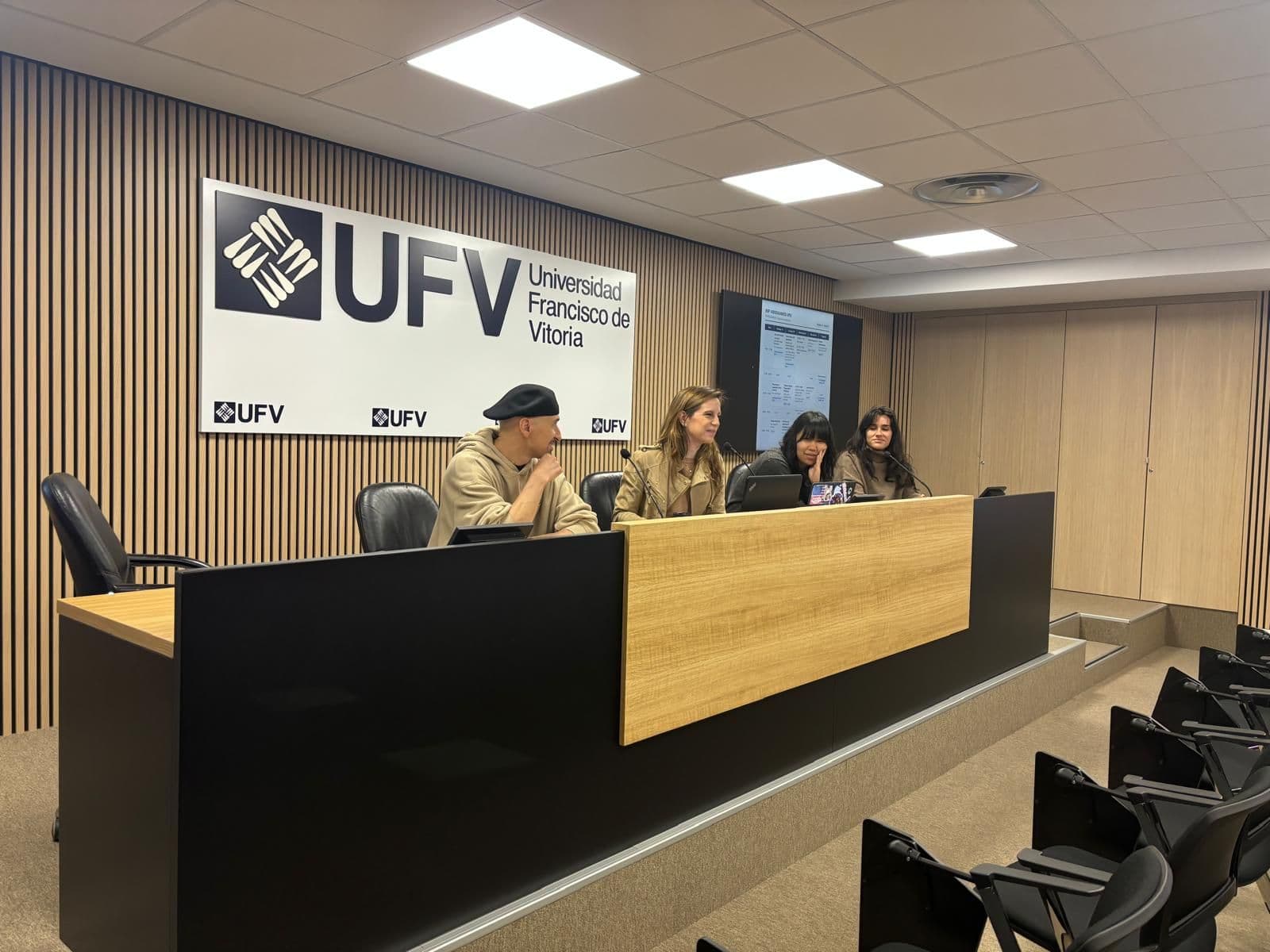
The Francisco de Vitoria University (UFV) brought together specialists in international law, human rights, and justice from Spain and Mexico for an international conference dedicated to analyzing human dignity as the foundation of the European legal system. The conference addressed challenges such as effective access to justice, the situation of migrants, and the limits of personal autonomy.
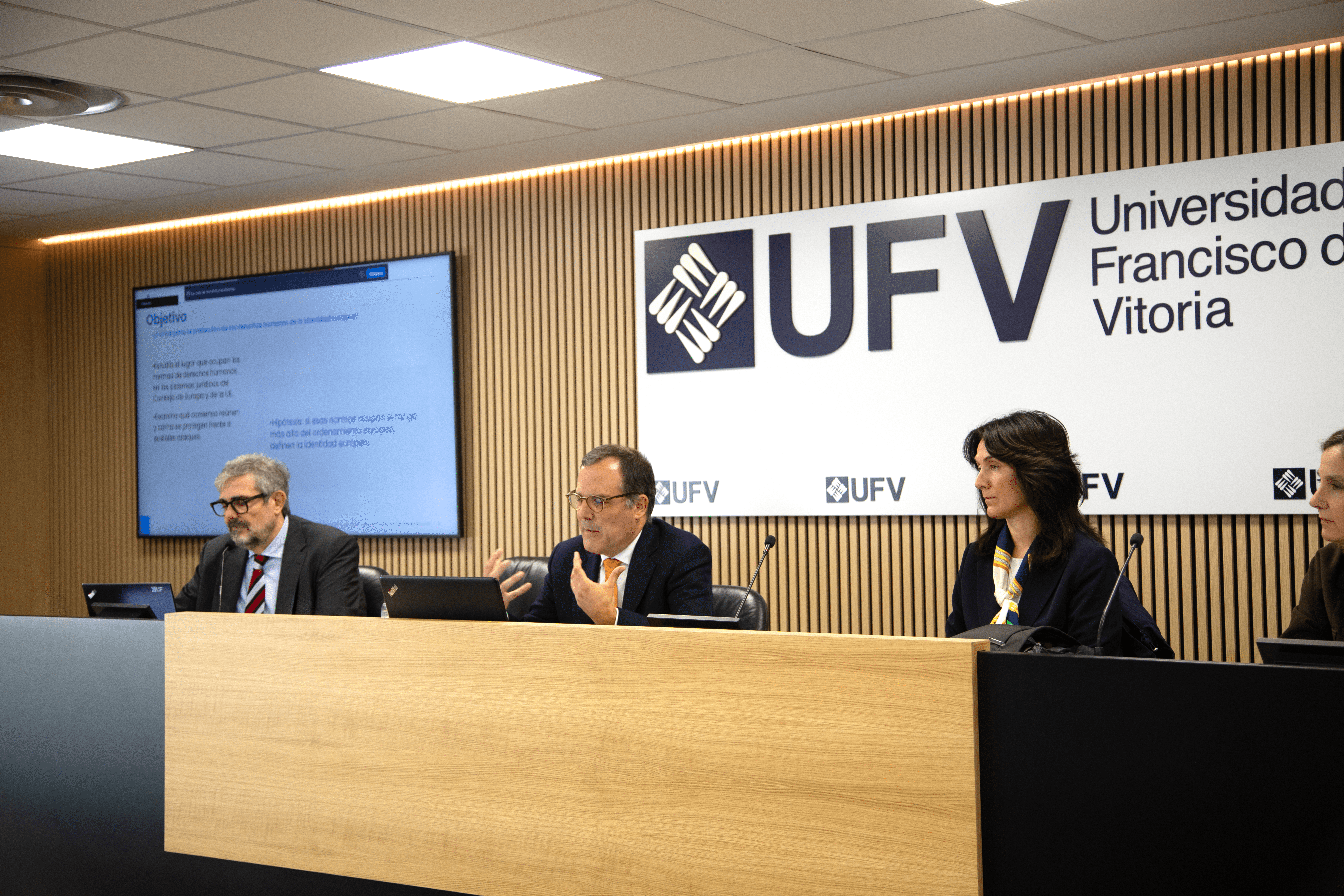
The initiative, which is linked to the research activities of the Public International Law and European Union Law Organized by the UFV, the event featured professors from the university, researchers from Mexican institutions, and professionals from the judicial sector. Among the organizations represented were Anáhuac University in Mexico, the National Autonomous University of Mexico (UNAM) and Spain's National Court.
The conference was attended by third-year students from the Bachelor's Degree Law from the UFV, who have had the opportunity to deepen the knowledge they acquired in the European Union Law course through direct contact with international researchers and legal professionals. This experience bridges the gap between academic education and legal research and provides insight into how different legal systems and courts address the current challenges of the protection of human rights.
Human Dignity as the Foundation of European Law
One of the main themes of the meeting was the analysis of human rights as an essential element of European legal identity.
Professor Carlos Spali addressed the binding nature of international human rights standards and the protection mechanisms developed by the Council of Europe and the European Union, examining the extent to which certain fundamental principles should take precedence over the individual will of states.
For her part, Begoña Rodríguez Díaz, a professor at UFV and holder of a Ph.D. in Law from UNED who received an extraordinary doctoral award, analyzed the possible evolution of equality and nondiscrimination toward mandatory rules of International Law in general, known as ius cogens. His research focused in particular on gender equality and the protection of people with disabilities.
Rodríguez Díaz defended the need to continue exploring the foundations of these rights: “I believe that, from within academia, we can try to contribute to this effort by delving deeper into the basis of equality", a reflection he linked to what he calls 'our common human dignity.'
Professor Sonia Hernández Pradas, a specialist in international humanitarian law and child protection at UFV, examined the legal tensions between the right to life, dignity, and personal autonomy. In her presentation, titled Is there a right to die in the European Union?, raised a central question regarding the interpretation of human rights: “How far can the freedom and the autonomy "Do we have the right to decide whether we or others should die?"
International Academic Cooperation in the Face of Challenges to Legal Protection
The participation of researchers from Mexican universities has brought a comparative perspective to the application of the human rights in Europe and Latin America.
Janett Hernández López, a professor at Anáhuac Puebla University, presented a study on Mexican and European case law regarding people in vulnerable situations, while Margarita Haro analyzed the challenges of the legal humanism and the effective implementation of international protection instruments.
Haro also highlighted the main challenges: “Consistency between values and protection mechanisms, effective judicial cooperation, above all, and the strengthening of institutions,” emphasizing the importance of having judicial systems capable of guaranteeing recognized rights.
For his part, Javier Espinoza de los Monteros, a professor at Anáhuac University in Mexico and a member of its Institute for Legal Research, analyzed the relationship between migration, security, and human dignity in contemporary constitutionalism.
In this regard, he emphasized: “Migration is one of the most significant scenarios "to examine this contradiction," when discussing the tensions between the universal recognition of rights and the restrictions faced by migrants.
Access to justice and the protection of fundamental rights
The conference also drew on the expertise of professionals from the judicial sector. Joaquín Delgado, a judge on the National Court, addressed the human right to access to justice, which is particularly relevant for people in vulnerable situation. Delgado helped draft the Brasilia Rules and served as an expert for the European Union in the drafting of the Ibero-American Convention on Access to Justice.
From a philosophical perspective, Juan Carlos Abreu y Abreu, a professor of law at Anáhuac University in Mexico and president of the Mexican Institute of Legal History, explored the thought of Hannah Arendt and the importance of recognizing the individual within the community. “The dignity "It cannot be deduced from a regulatory system; it is evident in people," the expert stated.
The relationship between human rights and the European Union’s foreign policy was also a topic of discussion at the meeting. Ana Cruz Cervantes examined the democracy clauses in international trade agreements and their implications, drawing on the cases of Burundi and Vietnam. The researcher raised an important question for evaluating these instruments: “We must also ask ourselves who bears the costs of conditionality.”
International Legal Research and Training in Law at the UFV' Bachelor's Degree
The conference is part of UFV’s academic and research activities in the field of international law and European Union law. In this context, the work of Jordi Regí Rodríguez—professor of public international law and European Union law at UFV and director of the research group on European Union Law in the global context.
The participation of international researchers and legal professionals It has fostered the exchange of knowledge among academic institutions and has enabled future legal professionals to engage with specialized discussions on contemporary challenges in the field of law.
These types of events reflect an educational approach that integrates legal knowledge with reflection on its foundations and its application in the service of the individual.