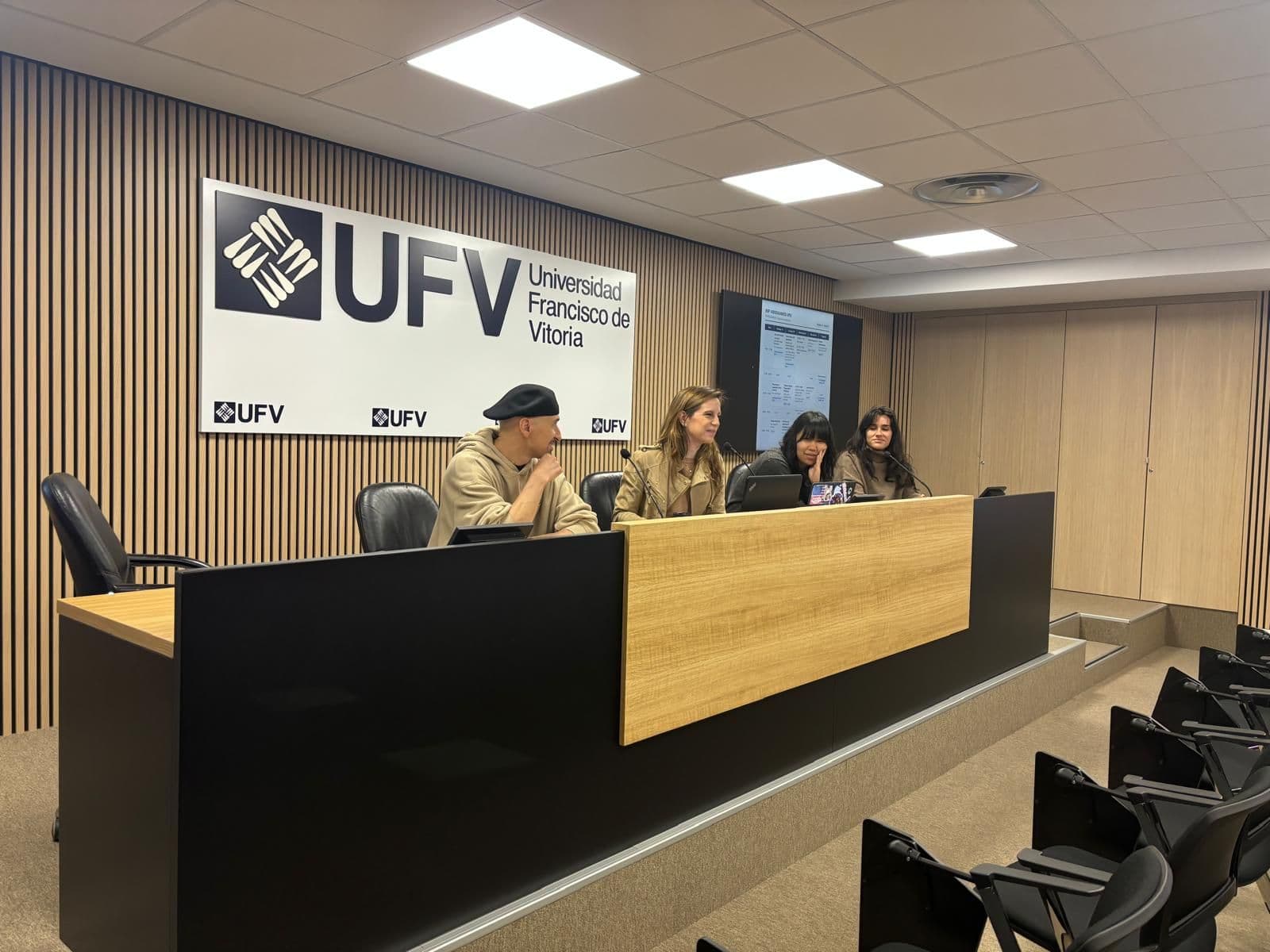
The Universidad Franciso de Vitoria (UFV) inaugurated the on Thursday 3rd International Conference on Mentoring in the Business World, under the slogan “The Impact of Humanization on the Workplace”. Over the course of two days, representatives from the business and academic communities will discuss how to build organizations capable of balancing results, innovation, and competitiveness with the holistic development of individuals.
The institutional opening ceremony was attended by Maleni Medina, director of the UFV Support Institute; Javier de Cendra, dean of the School of Law, Business, and Government; and Daniel Sada, president of Francisco de Vitoria University.
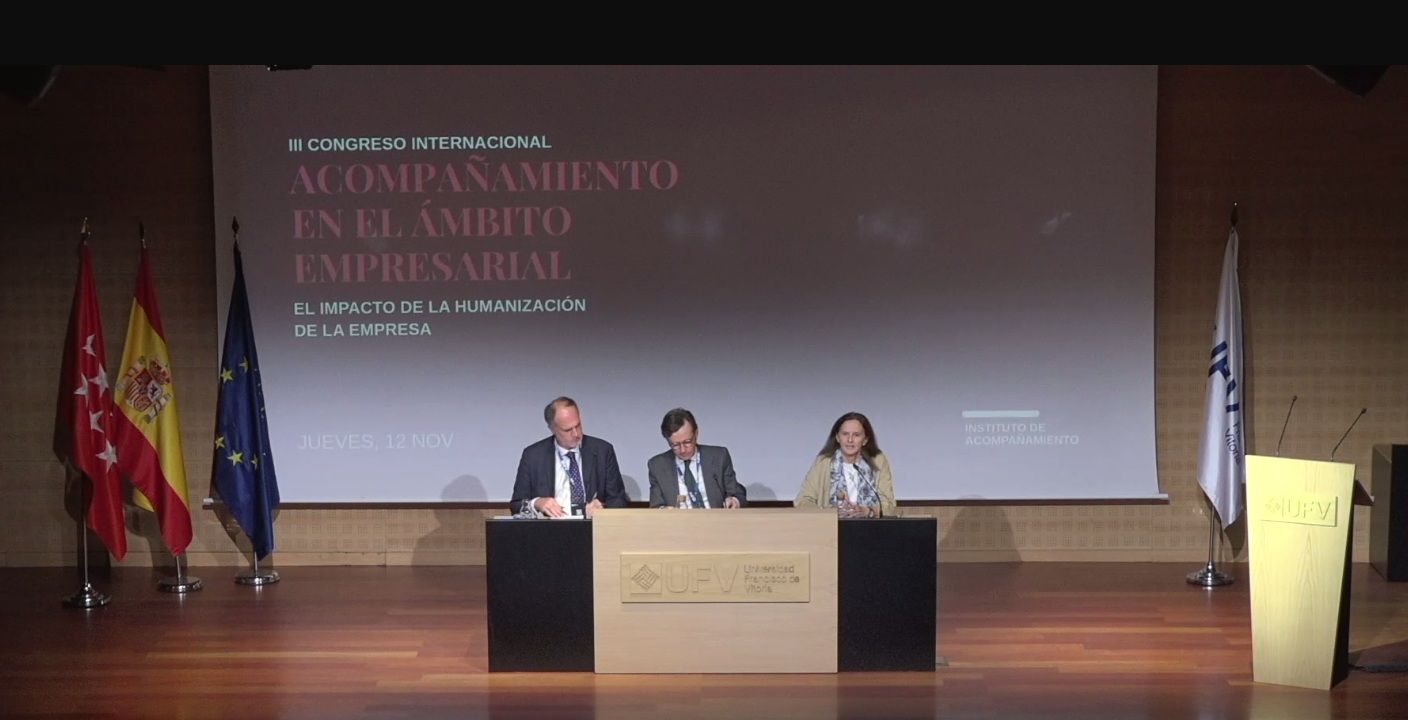
Maleni Medina has placed one question at the center of the discussion: “What kind of impact does our organization have on the people who work here?”. The director of the Institute for Support argued that “a company’s success lies not only in its performance, but also in the health of its relationships” and explained that the UFV’s proposal seeks to develop a “culture of support that aims to be a culture of relationships, a culture of humanization.”
For his part, Daniel Sada has drawn attention to the paradox that organizations face today in the face of technological advances: “We’ve never had so many resources, so much technology, so much data, so much analytical capacity, or so much artificial intelligence at our fingertips—and yet, many people still struggle every day to answer the most profound question: Why do I do what I do?”.
For the UFV president, the quality of a company “is not measured solely by results, technology, market share, or EBITDA,” but also “for his ability to see a face behind every position, a story behind every contract, and a person behind every role”.
Xavier Marcet: "From 'knowledge workers' to 'thought workers'"
The opening lecture, “The Humanization of Work and a Sense of Purpose in Contemporary Organizations”, was led by Xavier Marcet, a consultant and president of Lead To Change, who devoted much of his presentation to the changes that artificial intelligence is bringing to the workplace and the need to respond from a management humanist.
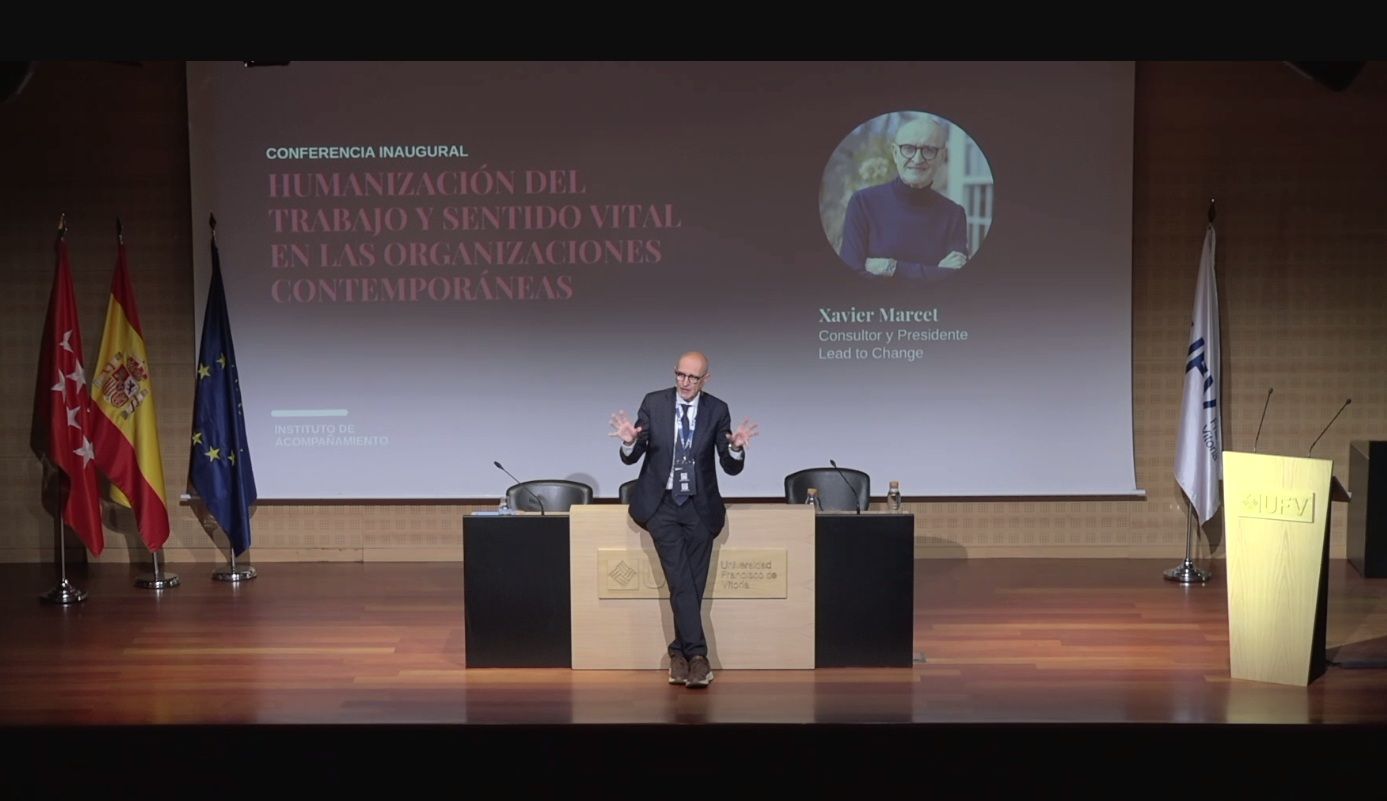
Marcet has summarized this approach to business management in a single idea: “We have to deliver results, but not at any cost.”. In light of the impact of artificial intelligence, he has pointed out that the current challenge lies in evolving from knowledge workers toward “intellectual workers”.
“If you can't factor in this human element, you're not using technology to your advantage”, he said. For Marcet, the uniquely human ability to think, ask questions, establish causal relationships, draw one’s own conclusions, and turn experience into criteria will be decisive in the new technological landscape.
In this context, he also highlighted the role of young people and universities: “The problem isn’t so much that we’re starting to lay off people en masse. The problem is that we’re not bringing young people on board. If we don’t bring young people on board, our companies’ perspectives will be biased. We have no future.”.
Leadership was another key theme of his speech. According to Marcet, “To lead is to serve” And those in positions of responsibility must remain open to listening and learning: “The day you stop learning, you suddenly grow old.”
Ultimately, his proposal involves striking a balance between people and technology: “People are the ones who will make a difference. When it comes to the balance between technology and people, there’s only one common-sense approach: to tip the scales in favor of people. And that’s our job.”.
Giving Meaning to Work and Supporting People
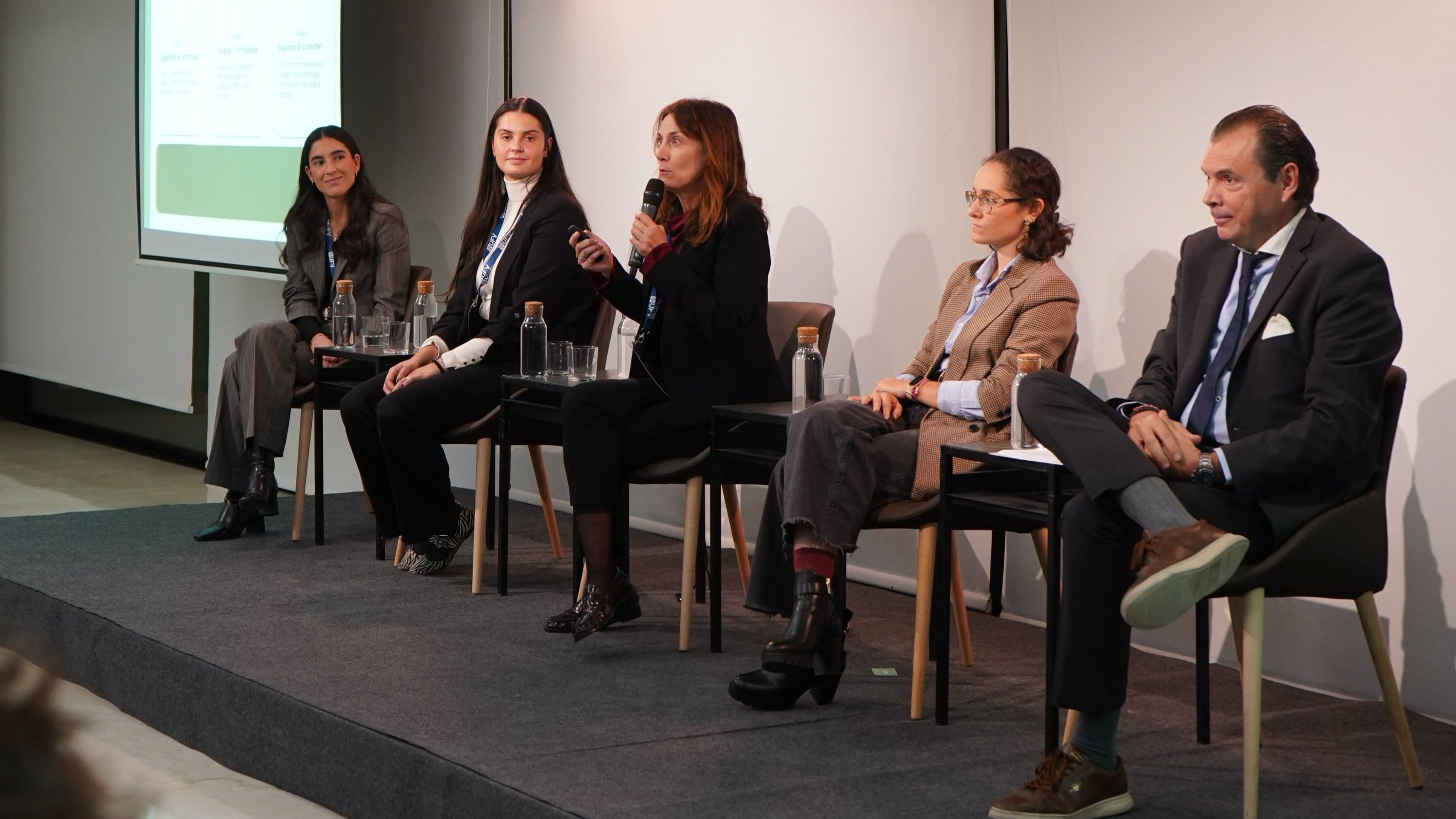
The first morning of the conference continued with a panel discussion on Meaning of Work and Support, moderated by Marta Montojo, director of Career Services at UFV, with the participation of Blanca Hernández Rodríguez, Enrique Ruiz, and Tomás Pereda.
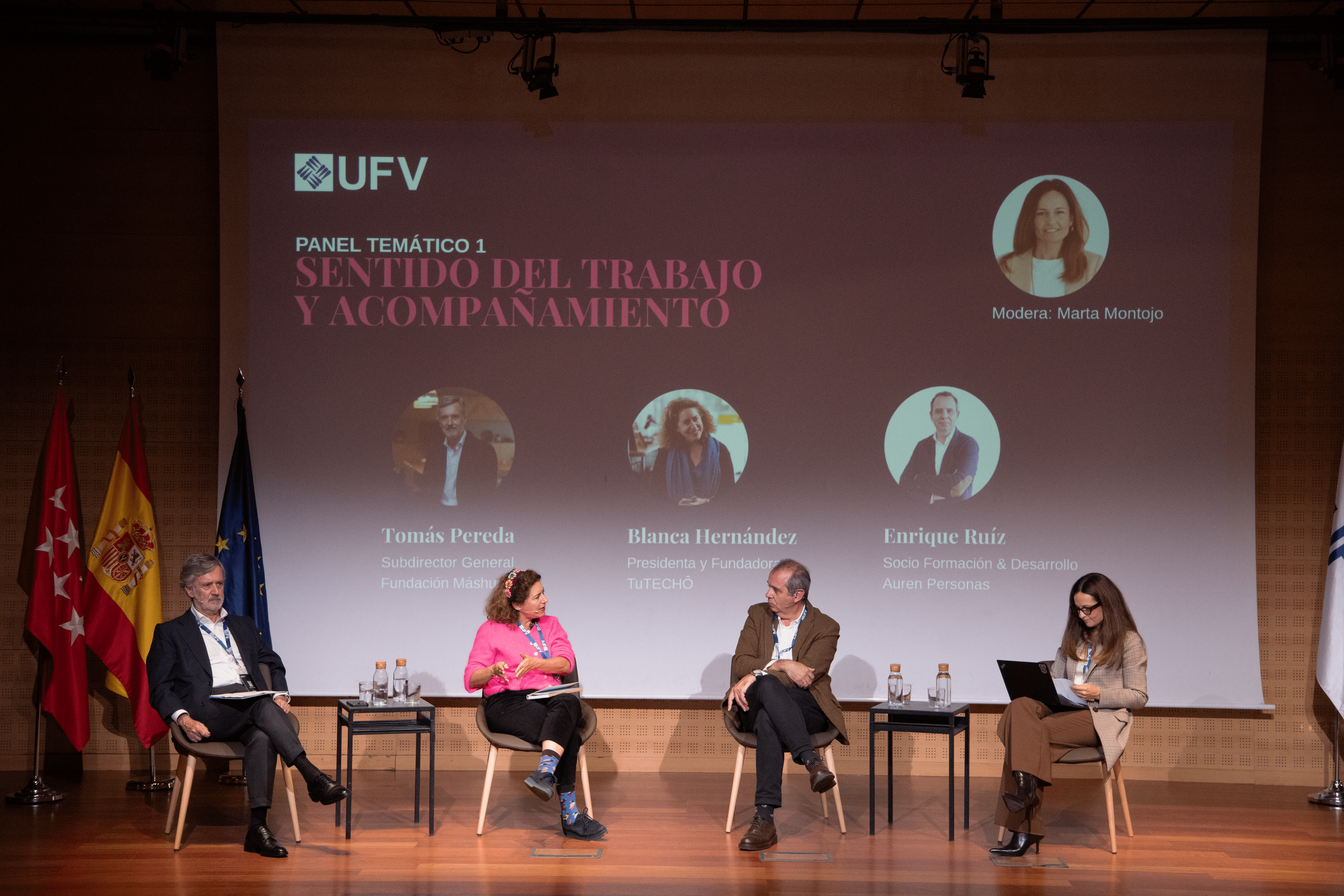
One of the central issues has been the gap that may exist between an organization's stated purpose and the meaning each person finds in their work.
Enrique Ruiz summed it up this way: “Supporting someone means being there for them, and the person who is closest to them is the manager.”, and he has argued that a team leader should not limit himself to “correcting mistakes,” but rather to developing people’s abilities: “You’re not the team’s physical therapist who treats injuries; you’re the coach who develops skills.”.
Blanca Hernández Rodríguez has emphasized the same point: “Putting the person at the center—that means being there for them and listening.”, while Tomás Pereda has pointed out the need to distinguish between technological time and “human time”, especially when someone needs a listening ear and support.
The morning concluded with a hands-on workshop led by Susana Alonso and María Sánchez-Arjona, during which the Workfulness Index, a tool still under development and awaiting validation that aims to analyze six dimensions related to the meaning of work: identity, purpose and vocation, contribution, personal talent, relationships, and career progression.
This Afternoon: A Discussion on Artificial Intelligence and Automation
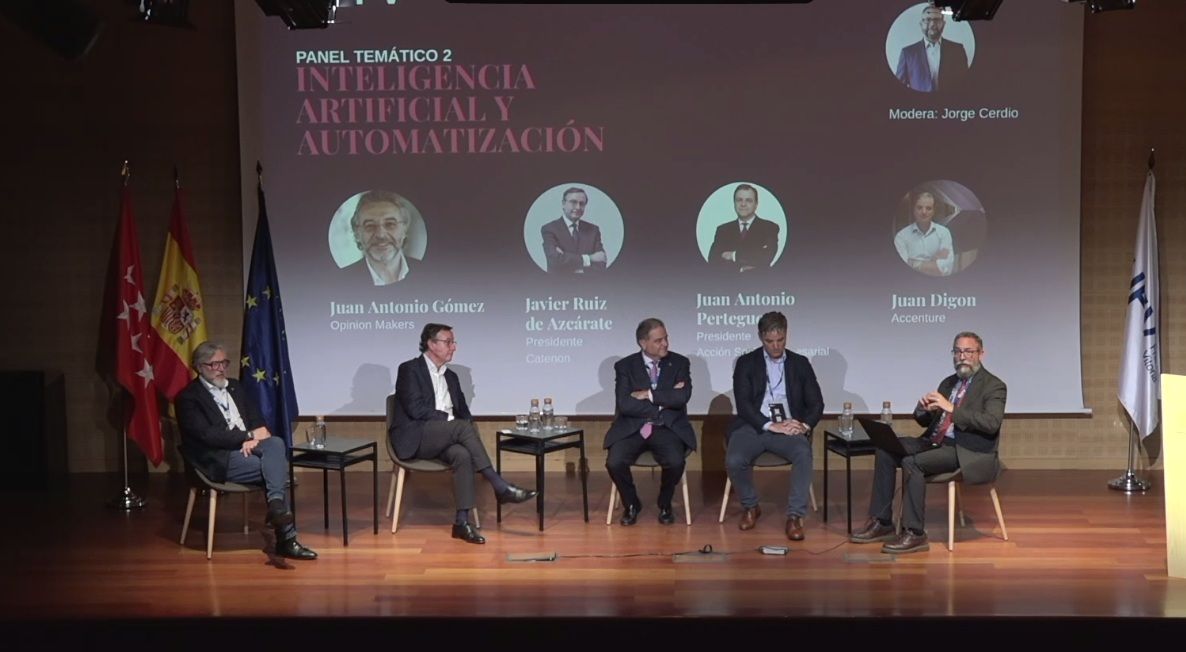
The conference will continue this afternoon with one of the main topics of the event: The Impact of Artificial Intelligence and Automation on Organizations, with a panel dedicated to Artificial Intelligence and Automation, moderated by Jorge Cerdio and featuring Juan Antonio Perteguer, president of Acción Social Empresarial; Javier Ruiz de Azcárate, president of Catenon; Juan Digon of Accenture; and Juan Antonio Gómez Bule of Makers Consulting. The conference will then continue with scientific presentations.
Friday: Leadership, Well-Being, Talent, and Humanizing Businesses
On the second day, the Friday, November 13, will expand on the discussion with four major areas. In the morning, there will be panel discussions dedicated to corporate governance and leadership, Sustainability and Workplace Well-Being and Talent Development and Support, with representatives from the business and academic communities.
Participants include professionals and academics affiliated with Notre Dame University, Bankinter, PwC Spain, AXA Seguros Spain, AEDIPE Centro, and Francisco de Vitoria University itself, among other institutions.
The conference will also address the role of the universities in the humanization of businesses, with representatives from the Catholic University of America, Strathmore University, and the Byron G. Thompson Center for Integrity in Finance and Economics.
The Third International Conference on Mentoring in the Business World will conclude with the lecture “Toward Supportive Organizational Cultures”, presented by Sigrid Marz, president of UNIAPAC International.
In this context, Francisco de Vitoria University views support as a way of understanding relationships within organizations that goes beyond specific tools for coaching or mentoring. The conference aims to apply these insights to the real-world context of businesses and open a dialogue on how Competitiveness, innovation, and technological development can advance hand in hand with a culture that nurtures relationships, fosters personal growth, and preserves what brings a distinctly human value to work.