The Ramón Areces Foundation has selected the project by the Francisco de Vitoria University (UFV) Style as an Argument: The Canon and Decalogue of Literary Journalism in Spanish at the Third National Competition for Research Grants in the Humanities 2026. Directed by Álvaro Pérez Álvarez, professor and researcher at the Bachelor's Degree Journalism, over the course of three years, the study will examine the narrative resources and ethical principles that characterize this journalistic tradition.
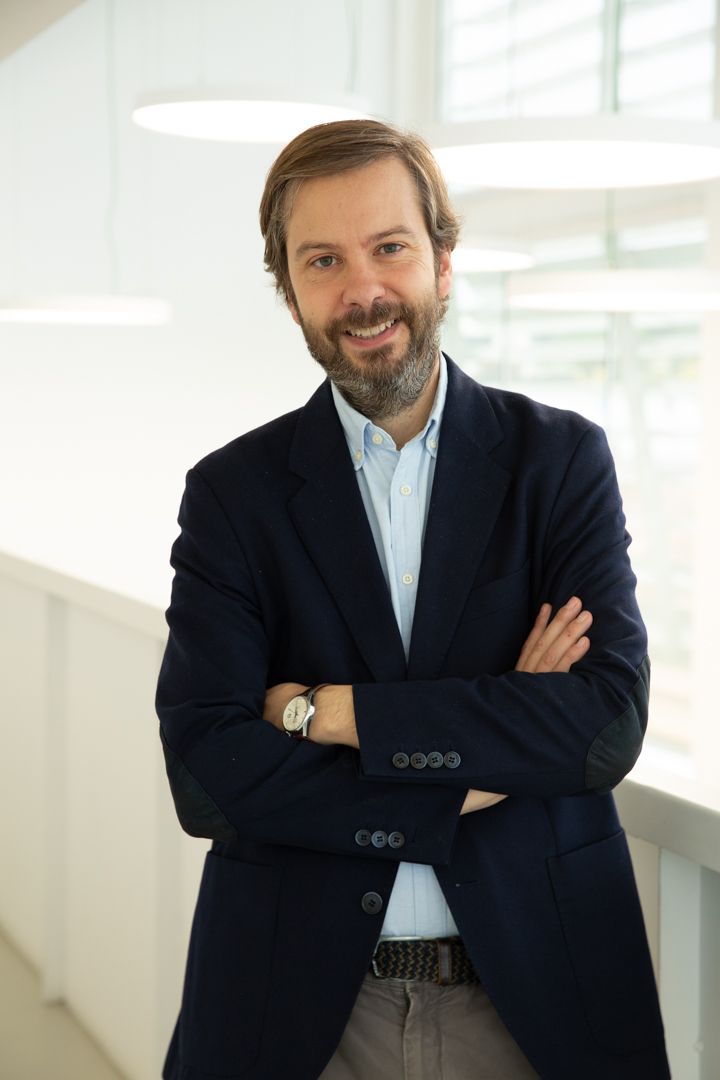
Being selected through a competitive national call for proposals validates the scientific proposal and highlights the research work of the faculty at UFV’s School of Communication Sciences. The project addresses a central issue in the training of future journalists. It examines how to use literary resources to accurately recount real events and portray the people at the center of the stories with respect.
Ten Authors to Study Literary Journalism in Spanish
The research team, which also includes Arturo Encinas Cantalapiedra, a tenured professor at UFV, will study the relationship between literary journalism in Spanish and other movements, particularly American New Journalism. The narrative techniques that Tom Wolfe systematized in 1973 will serve as a point of comparison to identify the distinctive features of the Spanish tradition and examine its evolution.
“Spain has a tradition of literary journalism as rich as that of American New Journalism, but it has never been systematized. We want to describe what makes it unique and turn that knowledge into a tool for training the journalists of the future,” explains Álvaro Pérez Álvarez.
The research will analyze texts by Manuel Chaves Nogales, Josep Pla, Azorín, Josefina Carabias, and Julio Camba, along with those by Ander Izagirre, Manuel Jabois, Jorge Bustos, Rosa Montero, and David Gistau. The analysis will cover feature stories, profiles, chronicles, interviews, and opinion columns. Among other aspects, the team will examine how the protagonists are portrayed and what role the narrator’s voice plays in recounting the events.
Ten Guidelines for Research and Teaching
The main expected outcome is a set of ten principles outlining the formal, narrative, and ethical characteristics of literary journalism in Spanish, developed through a comparative analysis of the ten authors. The project plans to publish this set of principles in an indexed international scholarly journal, disseminate its findings in at least four articles in indexed journals, and present them at international conferences and at a research seminar at UFV.
This work will make it possible to explore a future expansion into Latin American literary journalism, featuring authors such as Leila Guerriero, Martín Caparrós, Alma Guillermo Prieto, and Juan Villoro.
Skills for Practicing Journalism in the Age of Artificial Intelligence
The results of the research can be incorporated into the “ Bachelor's Degree ” in journalism to help students practice writing reports, feature stories, and profiles. Analyzing these texts will allow students to compare different ways of narrating the same type of event and to justify their decisions regarding the angle, the selection of facts, and the portrayal of the main characters.
In newsrooms, analytical skills, critical thinking, and teamwork are put into practice when verifying sources, assessing the relevance of information, and reviewing a text before publication. Artificial intelligence tools can facilitate research and editing tasks. It is the journalist’s responsibility to verify these results and take ownership of the editorial decisions they make.
The Ten Commandments will provide faculty members in the School of Communication Sciences with a resource to apply this approach in the classroom and prepare future journalists to tell stories of public interest with rigour and narrative quality.