

Hands-on training that makes a difference: four areas, a wide range of experiences, and a comprehensive view of occupational therapy
At the Occupational Therapy Bachelor's Degree t at Francisco de Vitoria University (UFV), we understand that professional excellence is not achieved solely by acquiring knowledge, but by learning to apply that knowledge in real-world contexts, with real people, and in situations that require sensitivity, clinical judgment, and the ability to adapt. For this reason, we have designed a clinical placement model based on structured and progressive rotation pathways, which allows our students to experience different care settings and discover the wide range of opportunities offered by occupational therapy. What sets us apart is that all students gain experience in four major areas of professional practice: physical rehabilitation, geriatrics, pediatrics, and mental health. This experience allows them to gain a comprehensive view of the profession, work with people of different ages and with varying needs, and become familiar with different assessment and intervention methodologies.
The internships are organized through planned rotations in small groups, promoting a hands-on learning experience, individualized support, and greater involvement in the learning process.
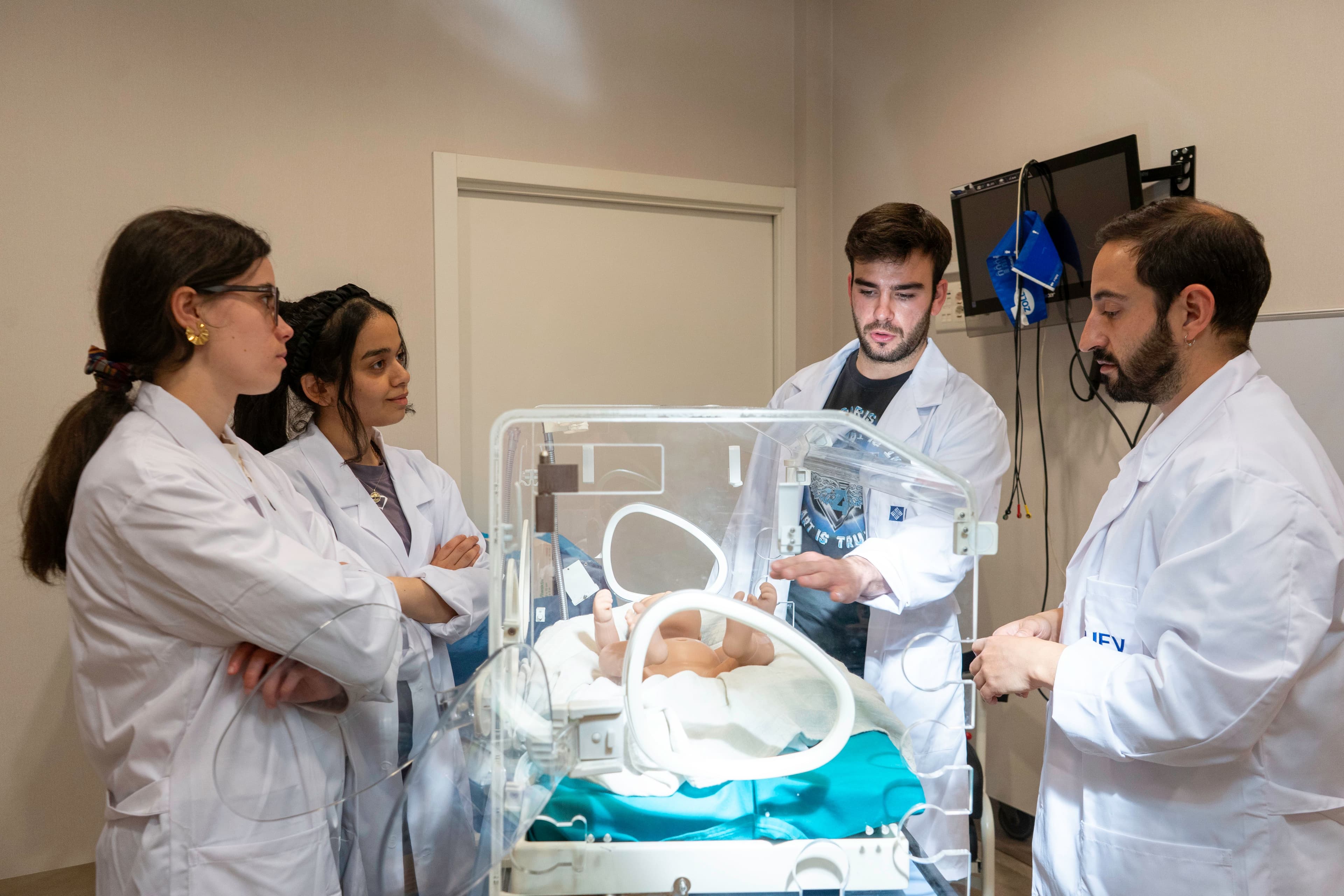
This model allows students to go beyond learning about a single area of patient care; instead, they progressively expand their skills, develop their clinical reasoning, strengthen their communication skills, and learn to work in interdisciplinary teams. Furthermore, our commitment to hands-on training begins in the first year, thanks to the integration of simulation into various courses in the degree program. In this way, students develop skills in safe environments that they can later apply during their clinical placements. At UFV, we view clinical placements as a true journey of personal and professional growth, in which each experience contributes to shaping the identity of the future occupational therapist.
Our goal is to train professionals who are prepared to tackle the challenges of healthcare practice, capable of adapting to different contexts, and, above all, committed to improving people’s independence, participation, and quality of life.
Because it's not just about doing internships—it's about discovering all the ways that occupational therapy can transform lives.


