





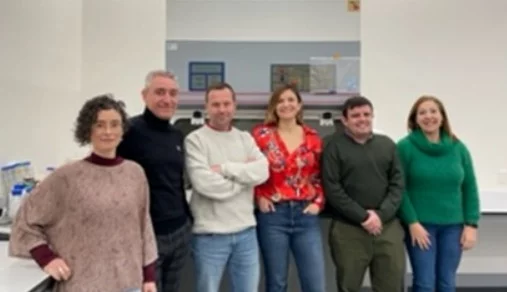
RESEARCH GROUP
ON MICROBIAL BIOTECHNOLOGY
Principal Investigator
Technical Staff
Ms. Raquel Francisco
Predoctoral Students
- Ms. Alejandra Sabater
- Ms. Lidia Glagiardi
Lines of Research
- Multidrug-resistant bacteria:
Genotypic and phenotypic characterization
of multiresistant bacteria to antibiotics. - Polyphenols and cancer: Study of the antitumor potential of grape
must polyphenols in tumors of interest in pediatrics. - Microbiota studies.
RESEARCH SUMMARY
- Genotypic and phenotypic characterization of multidrug-resistant
bacteria.
Infections by multidrug-resistant bacteria, especially carbapenemase-producing bacteria (EPC), have increased severely in recent years and are associated with high mortality rates. The general objective of this work is to increase the knowledge about the molecular mechanisms that allow the acquisition and dissemination of antibiotic resistance genes in pathogenic bacteria, especially in the presence of subinhibitory amounts of antibiotics. In addition, infections associated with medical implants are being prevented with modified biomaterials. Using resistant strains isolated from patients, the efficacy of new biomaterials with various modifications is being evaluated, as well as the search for new products of natural origin that can affect bacterial growth or biofilm formation.
- Study of the antitumor potential of grape
must polyphenols in tumors of interest in pediatrics.
Data obtained in a project carried out in collaboration with the company Mostos Españoles S. A., have shown the presence of high concentrations of the polyphenols catechin and quercetin in grape must of the Airén variety. Polyphenols are characterized by their antioxidant capacity and their anticarcinogenic, anti-inflammatory, cardioprotective, immunomodulatory, etc. effects. Grapes and grape must are natural products of common consumption and high demand in the food industry, hence the interest in learning more about the beneficial health effects of these products. The objective of this project is to study the effect that grape polyphenols, especially catechin and quercetin, have on some of the most prevalent pediatric tumors such as leukemia and medulloblastoma. In addition, we are interested in determining the molecular mechanisms that polyphenols exert on tumor cells, in order to be able to modulate them and use them as therapeutic targets. This knowledge would open the door to the application of these natural products as bioactive agents against cancer.
- Microbiota studies:
In recent years, the intestinal microbiota has proved to be a determining factor in human health, influencing the development of numerous diseases of diverse etiology. Our research is carried out in animal models and in intervention and observational trials in humans. The study of the microbiota is performed by Next Generation Sequencing (NGS) techniques and our work is focused on the processing of the sequencing data of the 16s rRNA gene and the ITS and ITS2 regions of the 18s gene to obtain taxonomic information and subsequent statistical analysis.
PROJECTS: the last 5 years
- Study of the potential antitumor effect of grape must polyphenols on tumors of interest in pediatrics. PI: Dr. Cruz Santos Tejedor.
Funded by: Universidad Francisco de Vitoria. 2023-2024. - Study of the generation of antibiotic resistance in pathogenic bacteria: adaptation to subinhibitory concentrations and prevention of infections associated with biomaterials. Funded by: Universidad Francisco de Vitoria. 2021-2022.
- Effect of grape juice polyphenols in the apoptosis induction in human tumor cells. Universidad Francisco de Vitoria. PI: Dr. Cruz Santos Tejedor.
Funded by: Universidad Francisco de Vitoria. 2022. - Characterization of the intestinal and vaginal microbiota from a network analysis perspective in patients undergoing long-term radiation for gynecological cancer and its relationship with quality of life. Funding entity: Universidad Francisco de Vitoria (2023 – 2024). PI: Dr. Carlo Bressa Dalla Fini.
- Production of EGFRxCD3 bispecific antibody in LiTe (Light T cell engager) format using E. coli as a biofactory. PI: Dr. Cruz Santos. Funded by: MERCK-UFV Chair. 2019-2021.
PATENTS:
- National Patent 201500058: Method for identification of wine yeast strains from must samples.
Date granted: 18-02-2017.
PUBLICATIONS
- Gonzalez-Soltero, Rocío, Mariangela Tabone, Mar Larrosa, Maria Bailen, and Carlo Bressa. 2024. “VDR Gene TaqI (Rs731236) Polymorphism Affects Gut Microbiota Diversity and Composition in a Caucasian Population.” Frontiers in Nutrition 11. https://doi.org/10.3389/fnut.2024.1423472.
- Martínez-López, Sara, Mariangela Tabone, Sara Clemente-Velasco, Maria del Rocío González-Soltero, María Bailén, Beatriz de Lucas, Carlo Bressa, et al. 2024. “A Systematic Review of Lifestyle-Based Interventions for Managing Alzheimer’s Disease: Insights from Randomized Controlled Trials.” Journal of Alzheimer’s Disease 102 (4): 943-66. https://doi.org/10.1177/13872877241292829.
- Rodríguez-Moreno, Carla B., Héctor Cañeque-Rufo, Miguel Flor-García, Julia Terreros-Roncal, Elena P. Moreno-Jiménez, Noemí Pallas-Bazarra, Carlo Bressa, Mar Larrosa, Fabio Cafini, and María Llorens-Martín. 2024. “Azithromycin Preserves Adult Hippocampal Neurogenesis and Behavior in a Mouse Model of Sepsis.” Brain, Behavior, and Immunity 117 (March): 135-48. https://doi.org/10.1016/j.bbi.2024.01.005.
- Tinnirello, Vincenza, Maria Grazia Zizzo, Alice Conigliaro, Mariangela Tabone, Nima Rabienezhad Ganji, Adele Cicio, Carlo Bressa, et al. 2024. “Industrial- Produced Lemon Nanovesicles Ameliorate Experimental Colitis-Associated Damages in Rats via the Activation of Anti-Inflammatory and Antioxidant
- Responses and Microbiota Modification.” Biomedicine &Amp; Pharmacotherapy 174 (May): 116514. https://doi.org/10.1016/j.biopha.2024.116514.
- Sara Aljama; Estela Pérez Lago; Olga Zafra Amorós; Javier Sierra Istúriz; Diana Simón Sanz; Cruz Santos Tejedor; Jesus Rodriguez Pascual; Noemí García Romero.(6/). 2023. Dichotomous colorectal cancer behavior. Critical Reviews Oncology/Hematology. Elsevier. 189, pp.104067. https://doi.org/10.1016/ j.critrevonc.2023.104067.
- Laura Rubio Pérez; Rodrigo Lazaro-Gorines; Seandean L. Harwood; et al; Luis Alvarez-Vallina; Cruz Santos Tejedor. (18/). 2023. A PD-L1/EGFR bispecific antibody combines immune checkpoint blockade and direct anti-cancer action for an enhanced anti-tumor response. OncoImmunology. Taylor and Francis. 12-1, pp.2205336. https://doi.org/10.1080/2162402X.2023.2205336
- Laura Martinez-Prat; Victor Matinez-Taboada; Marcos Lopez-Hoyos; Cruz Santos Tejedor; Michael Mahler. (4/). 2022. Anti-Protein-Arginine Deiminase 4 IgG and IgA Delineate Severe Rheumatoid Arthritis. Diagnostics. MDPI. 12(9) pp.2187. https:// doi.org/10.3390/diagnostics12092187
- Daniel J García-Martínez, Javier Calzada Funes, Carlos Martín Saborido, Cruz Santos (2022) Grape Polyphenols to Arrest in Vitro Proliferation of Human Leukemia Cells: A Systematic Review and Meta-analysis, Food Reviews International, 38:4, 402-419, DOI: 10.1080/87559129.2020.1810700
- Bailén M, Tabone M, Bressa C, Lominchar MGM, Larrosa M, González-Soltero R. Unraveling Gut Microbiota Signatures Associated with PPARD and PARGC1A Genetic Polymorphisms in a Healthy Population. Genes (Basel). 2022 Feb 1;13(2):289. doi: 10.3390/genes13020289. PMID: 35205333; PMCID: PMC8871880. https://doi.org/10.3390/genes13020289
- Tabone M, Garcia-Merino JA, Bressa C, Rocha Guzman NE, Herrera Rocha K, Chu Van E, Castelli FA, Fenaille F, Larrosa M. Chronic Consumption of Cocoa Rich in Procyanidins Has a Marginal Impact on Gut Microbiota and on Serum and Fecal Metabolomes in Male Endurance Athletes. J Agric Food Chem. 2022 Feb 16;70(6):1878-1889. doi: 10.1021/acs.jafc.1c07547. Epub 2022 Feb 3. PMID: 35112856. https://doi.org/10.1021/acs.jafc.1c07547
- Dominguez-Balmaseda D, Bressa C, Fernandez-Romero A, de Lucas B, Perez-Ruiz M, San Juan AF, Roller M, Issaly N, Larrosa M. Evaluation of a Zingiber officinale and Bixa orellana Supplement on the Gut Microbiota of Male Athletes: A Randomized Placebo-Controlled Trial. Planta Med. 2022 Oct;88(13):1245-1255. doi: 10.1055/a- 1671-5766. Epub 2022 Feb 28. PMID: 35226949. https://doi.org/10.1055/a-1671- 5766
- Segovia-Rodríguez L, Echeverry-Alzate V, Rincón-Pérez I, Calleja-Conde J, Bühler KM, Giné E, Albert J, Hinojosa JA, Huertas E, Gómez-Gallego F, Bressa C, Rodríguez de Fonseca F, López-Moreno JA. Gut microbiota and voluntary alcohol consumption. Transl Psychiatry. 2022 Apr 7;12(1):146. doi: 10.1038/s41398-022- 01920-2. PMID: 35393390; PMCID: PMC8990010. https://doi.org/10.1038/s41398- 022-01920-2
- M.R. Moreno-Jiménez, N.E. Rocha-Guzmán, M. Larrosa, C. Bressa, C.A. Segura- Sánchez, A. Macías-Salas, J.O. Díaz-Rivas, P. Flores-Rodríguez (2022). Constituents of Quercus eduardii leaf infusion: Their interaction with gut microbiota communities and therapeutic role in colorectal cancer. Journal of Functional Foods, 97, 105258. https://doi.org/10.1016/j.jff.2022.105258
- García-Martínez DJ, Arroyo-Hernández M, Posada-Ayala M, Santos C. The High Content of Quercetin and Catechin in Airen Grape Juice Supports Its Application in Functional Food Production. Foods. 2021; 10(7):1532. https://doi.org/10.3390/foods10071532
- Tabone M, Bressa C, Garcia-Merino JA, Moreno-Perez D, Van EC, Castelli FA, Fenaille F, Larrosa M. The effect of acute moderate-intensity exercise on the serum and fecal metabolomes and the gut microbiota of cross-country endurance athletes. Sci Rep. 2021 Feb 11;11(1):3558. doi: 10.1038/s41598- 021-82947-1. PMID: 33574413; PMCID: PMC7878499. https://doi.org/10.1038/s41598-021-82947-1