






UNIVERSITY MASTER'S DEGREE IN SPIRITUAL ACCOMPANIMENT
God on the other
how do I know if this is from God?
Why don’t I feel anything when I pray?
How to forgive myself?
Marriage, singleness, consecration… how to choose?
Why do I have these dreams?
These and many other questions arise regularly in the life of faith. The challenge is not so much to answer them, but to accompany them. We help you to do so through this new program. A master’s degree with an experiential approach, with a solid anthropological and theological foundation, developed from the wisdom and tradition of the Church.
IT IS ABOUT TO DISCERN WITH THE WISDOM OF THE CHURCH
We offer you this new University Master’s Degree in Spiritual Accompaniment, designed to help you accompany authentically, integrally.
Supporting difficult moments and celebrating the pleasant ones.
OVER 20,000 STUDENTS
In the last 10 years, more than 20,000 students have gone through the programs and mentoring of our Institute of Accompaniment.
Today, we are launching this new program knowing that the skills of accompaniment can be definitive in the spiritual field.
We offer you this Univsrity Master’s Degree in Spiritual Accompaniment, designed to grow in the accompaniment and service to the person in his or her integral development.
Modality Master in Continuing Education (60 ECTS)
- Academic credit: University Master’s Degree in Continuing Learning
- Course load: 60 ECTS
- Modules: 4 theoretical modules + 1 practical module
- Weekend meetings: 3 mandatory meetings
- Pre-recorded videos: Yes
- Supervised practicals: Yes
- Individual and group mentoring: Yes
- Downloadable notes: Yes
- Chat and teaching forum: Yes
- Live sessions: Wednesdays at 6:00 p.m.
Modality Diploma (33 ECTS)
- Academic credit: Diploma
- Course load: 33 ECTS
- Modules: 4 theoretical modules
- Weekend meetings: No meetings
- Pre-recorded videos: Yes
- Supervised internship: No
- Individual and group mentoring: No
- Downloadable notes: Yes
- Chat and teaching forum: Yes
PROGRAM:
It seeks to prepare the participant for the formative path through two steps.
- To become personally aware: to recognize the past, present and future in order to adopt an open and conscious attitude.
- To draw the spiritual horizon: to present the goals and foundations of the program, awakening enthusiasm, amazement and sense of responsibility.
Subjects and faculty:
- Welcome and inner disposition; Cecilia Castañera and Maleny Medina.
- Fundamentals of accompaniment and spiritual horizon; Cecilia Castañera and Maleny Medina.
- The first field of action: oneself; Cecilia Castañera and Maleny Medina.
It seeks for the participant to experience him/herself as a beloved child of God, redeemed and called to life.
Its main goals are:
- To reflect on human nature from an integral anthropology.
- To promote self-knowledge and inner reflection.
- To learn to live in connection with oneself, with freedom and responsibility.
- To promote personal harmony, integrating the physical, emotional, psychological and spiritual dimensions.
Subjects and faculty:
- Introduction to the question of man: anthropological and theological foundations; Miguel Ortega, P. and Gabriel von Wendt.
- Psychological structure and development of the person; María Martín Vivar.
- Identification of one’s own psychological structure; María Martín Vivar.
- Emotional wisdom and conscious life; María Martín Vivar
Seeks to form the student to spiritually accompany others,
To base accompaniment on the anthropology and theology of the person as a relational being.
- To understand the nature of accompaniment as an intentional and enriching relationship for both.
- To create healthy bonds and safe spaces of trust and respect.
- To develop an integral listening and a broad and enabling look.
- To accompany from the connection with oneself, with the other and with God.
- To learn to pray for and with others, discerning and helping to decide with freedom and authenticity.
Subjects and faculty:
- Anthropological and theological foundation of the relationship and accompaniment; Antonio Sastre.
- Relational style of the companion; Maleny Medina, Cecilia Castañera and Sonia González.
- Attention and presence; Teresa Barrera.
- Exploration and deepening; Patricia Castaño.
- Accompanying growth in the truth; Uge Álvarez.
Seeks to deepen the stages and dynamics of the spiritual life.
Subjects and faculty:
- Theological foundation; Cecilia Ruiloba.
- Organism of the spiritual life, graces and freedom; Jaime Peñalba.
- Call to holiness, vocation and identity; Fr. Ignacio José.
- Paths of prayer and growth; Fr. Ignacio José.
- Ecclesial dimension in spiritual accompaniment; Cecilia Ruiloba.
- Personal discernment; Uge Álvarez.
- Discernment in accompaniment; Uge Álvarez
Subjects:
- Advanced relational skills and pathologies of the bond
- Spiritual accompaniment and life in the Spirit
- Spiritual accompaniment and pathologies
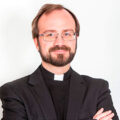
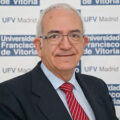
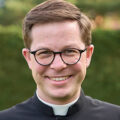
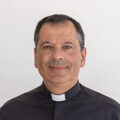
STEERING COMMITTEE AND FACULTY




GENERAL AIMS

Understanding the spiritual life as the life of Christ in the soul
Learn the discernment of spirits, both personally and in accompaniment
Know the stages of spiritual growth and how to actively participate in grace, prayer, virtue and service
To deepen in Christian prayer, in its forms and contemplative tradition
Integrate this knowledge to accompany each person according to his or her spiritual moment.
WHAT DOES THIS TRAINING PREPARE YOU FOR?
At the end of this training you will have acquired knowledge and skills that will enable you to spiritually accompany people in different ecclesiastical and pastoral contexts.
However, this University Master’s Degree does not in itself provide the qualification to practice spiritual accompaniment. The exercise of this service requires the express authorization of your ecclesiastical official (such as your bishop, superior, pastor or pastoral leader), depending on each case.
CALENDAR AND SYLLABUS
MODULE 1
Introduction: October 7–29.
MODULE 2
Encounter with the Self. From October 28, 2026, to December 9, 2026. Weekend meeting: From December 11 to 13, 2026: Friday evening from 6:00 p.m., full Saturday and Sunday until noon (Mandatory for Master students).
MODULE 3
Encounter with the other. From December 16, 2026, to March 31, 2027. Weekend Encounter: April 2 to 4, 2027: Friday from 10 am, full Saturday and Sunday until noon (Mandatory for Master students).
MODULE 4
Encounter with GOD. April 7, 2027 to June 30, 2027. (Compulsory for Master students).
MODULE 5
Practical module. Encounter with GOD. From 09/01/27 to 11/17/27. Weekend meeting: from December 17 to 19, 2027: Friday evening from 6:00 p.m., Saturday and Sunday until noon
*A recommendation for accommodation will be proposed.
*In person meetings are reserved for University Master’s Degree students
Admission profile
The University Master’s Degree is aimed at priests, consecrated and lay people who meet the following requirements:
a) Personal and spiritual requirements
Basic skills for accompaniment, especially listening skills, empathy and discernment.
Personal disposition for spiritual accompaniment, understood as openness to the formative process and personal growth.
Solid and stable spiritual life, including:
Regular participation in the sacramental life.
Regular practice of personal prayer.
Receive spiritual accompaniment on an ongoing basis.
b) Ecclesial and formative requirements
The following documentation is requested for admission:
Confirmation certificate
A letter of presentation and ecclesial recommendation, signed by:
Parish
Priest
Bishop (diocesan priests)
Religious superior
Pastoral leader
To attend the Master’s program you must present a certificate of higher education studies (university degree, diploma or other equivalent).
Admission process
1. Application and documentation
Submission of the admission form, curriculum vitae, confirmation certificate, letter of ecclesiastical endorsement and proof of studies.
2. Personal interview
Interview conducted by a member of the management team, following a template.
3. Approval in committee
The admission committee, based on the documentation submitted and the interview report, decides on admission or non-admission.
Some questions you may be asking yourself:
If I am a lay person, Why should I sign up for this training?
Each one can have his or her own motivations: personal learning, application in your parish or movement… What is clear is that the Church asks us to assume our lay responsibility, deepening our prophetic ministry and serving our neighbor. Besides, either the laity are formed or many people will be left without an adequate word of accompaniment. (The harvest is plentiful…)
If I am a priest or consecrated person, why should I sign up for this training?
Because the formation of academic cut, religious or priestly, – indispensable, no doubt-, may not be enough if we do not know how to guide, support or discern the one we have in front of us.
How many modules does this training have?
It has 5 modules: 4 theoretical modules for all students, and a last practical module for University Master’s Degree students.
How long does it last?
The program runs for 18 months, from October to December of the following year.
How much will it involve me?
That’s up to you. You will have a live session on Wednesdays from 6 pm to 8 pm (it is recorded). You will also have extra assignments and resources on the platform that teachers will share. In addition, you will have a total of 3 weekend face-to-face meetings. The time you dedicate to independent work, studying and reading, will make the difference in your learning results.
what are the registration modalities?
Access to the University Master’s Degree is restricted to graduates and university graduates. If this is not your case, you can access the “Diploma” mode, with 33 ECTS. In this modality you will have less content and no in person meetings are included.
What do the weekend meetings consist of?
In these meetings we will put into practice the contents acquired in the theoretical module. They will serve as training for what will come later in the final module, eminently practical.
What does mentoring consist of?
Since we aim for the program to “toque tu vida” (“touch your life”), a mentor will personally accompany you to help you ensure that the knowledge and tools you are acquiring are not mere theory, but that they bring about a real change in you.
What if I cannot attend the live sessions?
You must attend the synchronous sessions, as they are essential for the iteration of the program. If for some reason you are unable to attend, you will be able to watch the recording afterwards.
What if I cannot attend the weekend modules?
The in person modality modules are mandatory in the University Master’s Degree and you must attend all of them to obtain the University Master’s Degree; and the diploma program does not include weekend meetings.
When I finish my University Master's Degree, can I already accompany spiritually?
No, even if you have already completed your training, it will be your bishop, superior or ecclesial leader who can authorize you to work as a spiritual director.