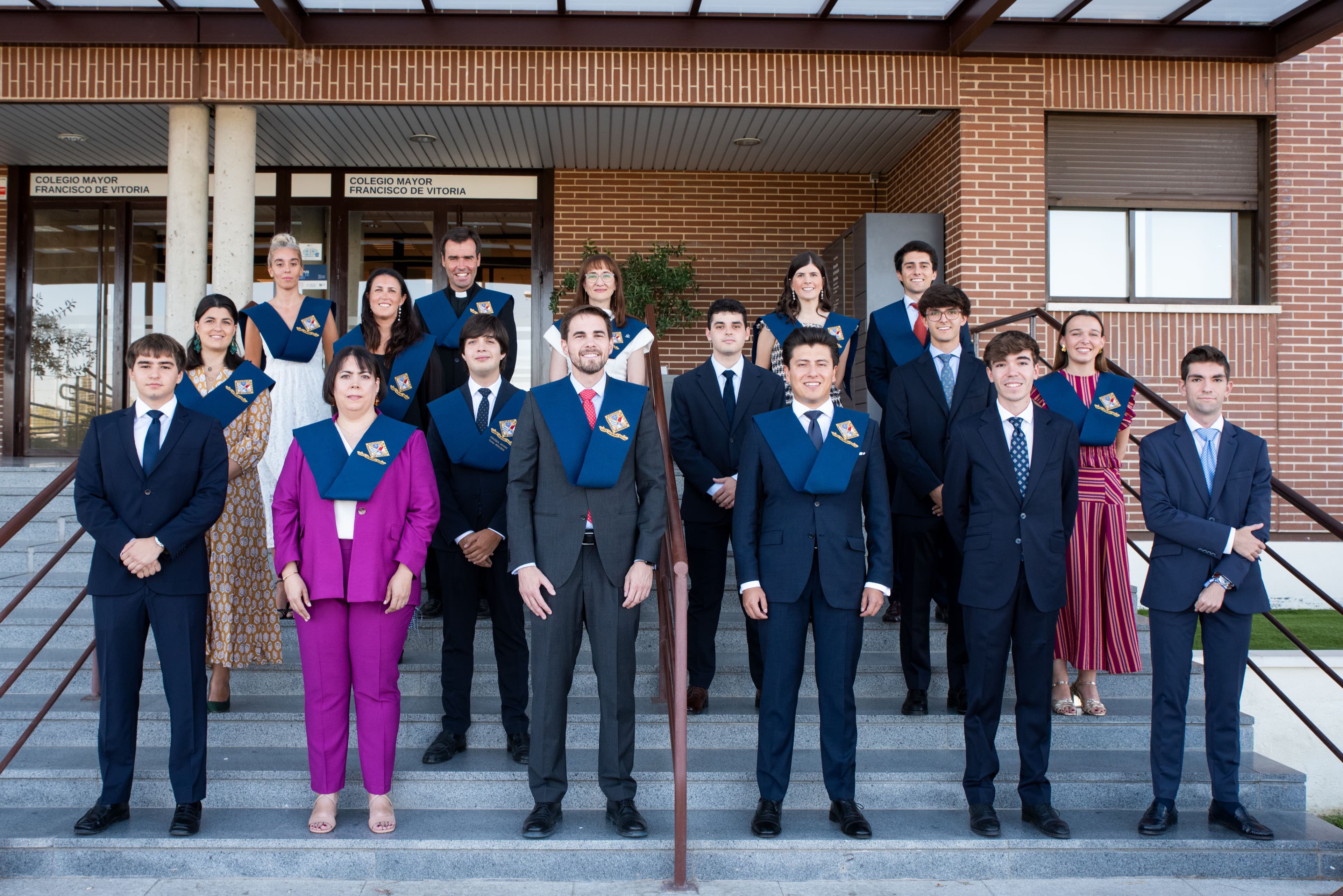
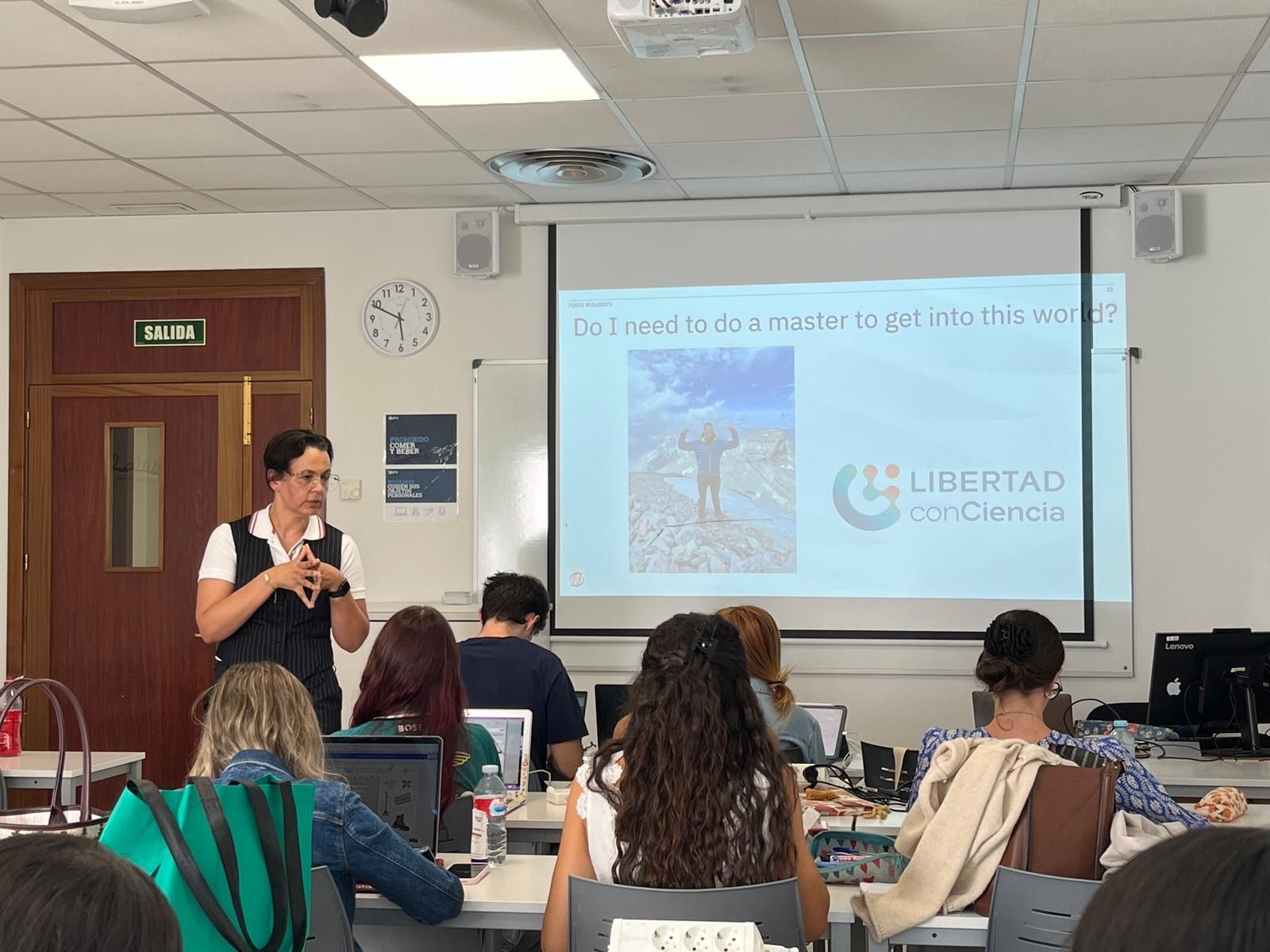
Students from the Bachelor's Degree in Genetics at Francisco de Vitoria University (UFV) have explored this field under the guidance of Astrid Pañeda, a Ph.D. in Biology and a specialist in genetics and molecular biology, with experience in research, gene therapy, rare diseases, the biotechnology industry, and clinical development.
Using real-life cases, the specialist demonstrated how knowledge gained in genetics can be translated from research to clinical trials and ultimately to patients, and introduced the students to various professional fields within a rapidly evolving sector.
When Genetic Research Reaches the Patient
Can gene therapy be administered in a Spanish hospital today? Pañeda opened the meeting held at the UFV by posing this question to illustrate the extent to which certain scientific advances have already moved from research to clinical practice. One of the examples discussed was spinal muscular atrophy, a genetic disease for which advanced therapies already exist. “If we look at a treatment for spinal muscular atrophy, the cost is around two million euros. Fortunately, La Paz has already treated 16 children with gene therapy,” he explained.
Rare diseases have played a significant role in Pañeda’s professional career. During the session, he also shared the case of a five-year-old boy with Sanfilippo B syndrome whose family learned about the possibility of transferring a clinical trial being conducted in the United States to Spain.
After consulting with the Spanish Agency for Medicines and Health Products regarding the proposal and receiving a favorable assessment, a process began that ultimately led to the trial being launched in Spain.* “The StopSanFilippo Foundation ended up contributing one million, and the clinical trial was launched in Spain,”* he said.
The case study allowed students to see the journey from a scientific breakthrough to its clinical application: research, risk assessment, regulation, funding, and clinical trials are all part of a process in which decisions ultimately affect specific patients and their families.
Greater diagnostic capability, greater need for interpretation
Another major change discussed during the meeting was the ability to anticipate the onset of symptoms through genetic diagnosis.
Pañeda described the case of a newborn in whom spinal muscular atrophy was detected through neonatal screening, which made it possible to consider treatment options before the disease progressed. Building on this example, he posed a question to the students about the future of genetics: “When will we take a newborn and sequence their entire genome? The genome provides a wealth of information,” he added.
This question highlights one of the challenges that future geneticists will face. The ability to obtain and process genetic information is growing rapidly, but having more data requires professionals capable of interpreting it, distinguishing what is relevant, and turning it into useful knowledge for decision-making.
In this context, artificial intelligence and computational tools applied to genomics are expanding our capacity to analyze large volumes of data. These advances make skills such as scientific reasoning, critical thinking, and professional judgment particularly important for formulating the right questions, evaluating results, recognizing their limitations, and assessing their implications.
Training Geneticists for a Changing Profession
The meeting also provided insight into how a new therapy is evaluated before it reaches patients and some of the decisions involved in clinical trials, which are particularly complex when they involve pediatric diseases.
This focus on professionals, real-world cases, and industry challenges is part of the curriculum for the Bachelor's Degree in Genetics at the Faculty of Experimental Sciences of the UFV, designed to help students connect the scientific and technical knowledge they acquire during their studies with the real-world scenarios in which they will need to apply it professionally.
Advances in gene therapy, genomics, genetic engineering, and data analysis are expanding the scope of practice for these professionals. Along with specialized knowledge, analytical skills, scientific reasoning, sound judgment, and a sense of responsibility are becoming increasingly important when making decisions that can have direct consequences on people’s lives.
The meeting with Astrid Pañeda allowed the students to see this for themselves through real-life situations. Case-based learning—where genetics enables us to understand and intervene with ever-greater precision—and training those who will have to interpret these possibilities and decide how to put them to work for the patient is one of the challenges of the profession.