What possibilities might lie in the byproducts left over after winemaking? This question brought together 32 students from the nine countries of the European ACE²-EU alliance at Universidad Francisco de Vitoria (UFV), where they spent two weeks exploring new applications for the bioactive compounds found in grapes.
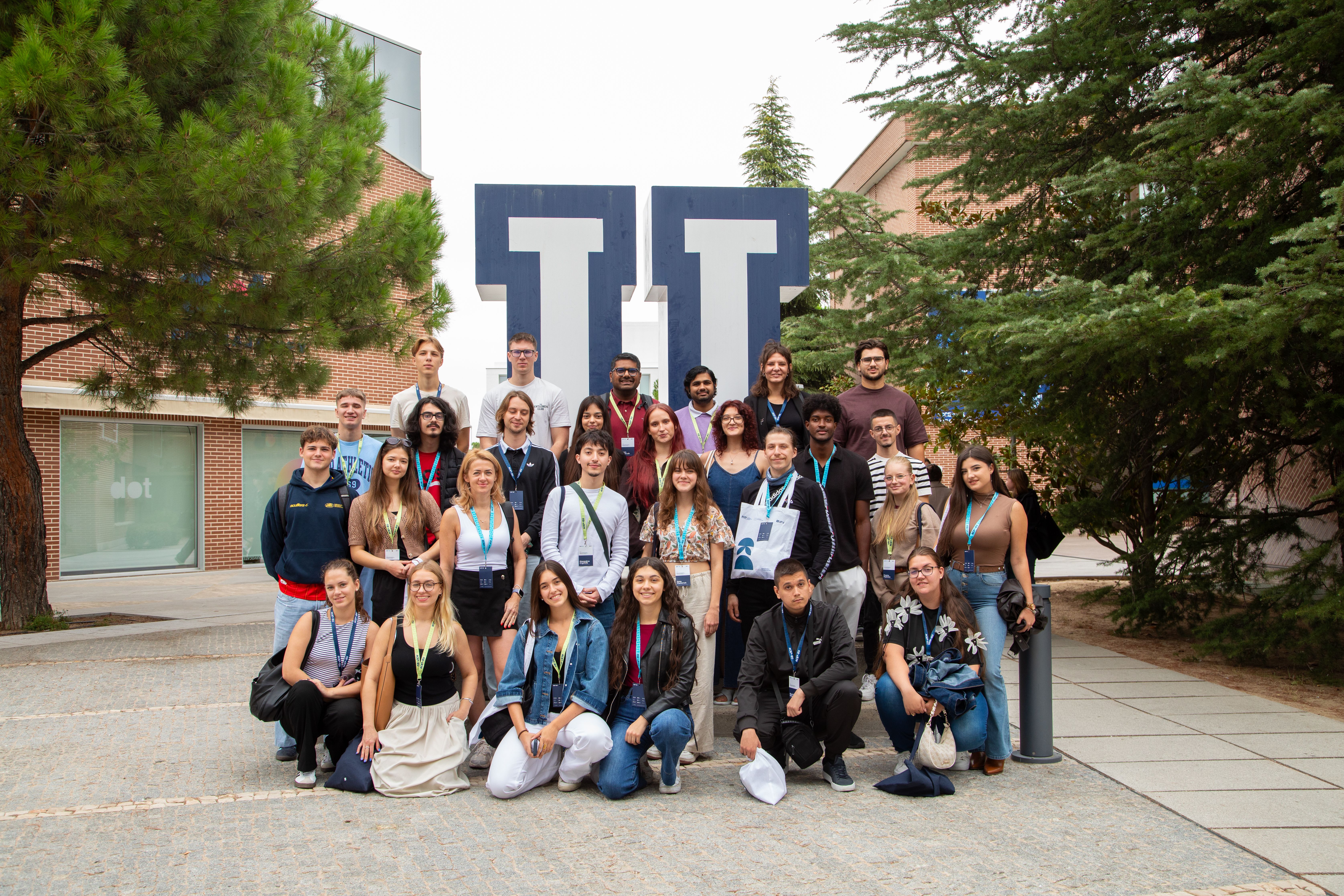
The challenge was part of the course “Grapes and Health: Exploring the Nutritional and Therapeutic Potential of Their Bioactive Compounds”, whose in-person week took place at UFV from September 28 to October 2. Participants were organized into international and interdisciplinary teams, with students from fields such as biotechnology, nutrition, engineering, and law.
The starting point was a real-life case. Las Moradas de San Martín, a winery located in San Martín de Valdeiglesias, provided information about its byproducts and production processes so that students could investigate possible ways to utilize them in the areas of food and health.
De un residuo de la elaboración del vino a una oportunidad de investigación
Grapes contain various bioactive compounds, including polyphenols, anthocyanins, and resveratrol, whose potential and relationship to various aspects of health continue to be the subject of scientific research.
Based on this knowledge, the teams studied how to make use of certain components—which are also present in byproducts of winemaking—to explore potential applications in areas such as functional nutrition and the development of new food products.
The project began with an initial week of online training, held from September 21 to 25. Afterward, the students traveled to UFV to carry out the experimental portion of the programme.
During the lab sessions, they extracted polyphenols from grapes and grape pomace and analyzed their antioxidant capacity. The lab exercises were designed so that students from a wide variety of disciplines could gain an understanding of the scientific process, including those with no prior laboratory experience.
Ciencia compartida entre disciplinas y países
programme combined experimental work with sessions on the potential applications of these compounds and specialized training on how to communicate the projects developed by the teams.
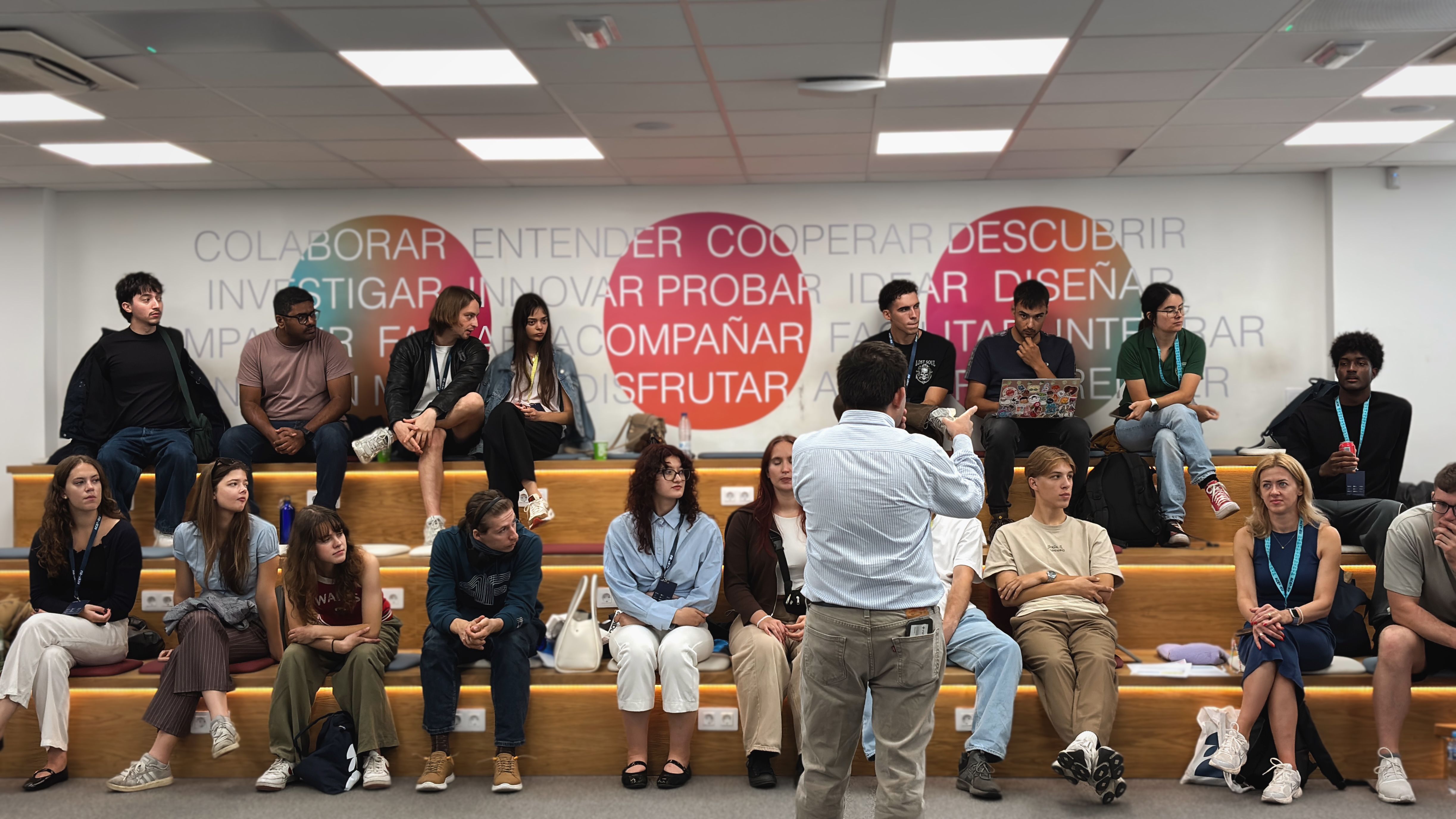
One of the keynote presentations was given by Jara Pérez Jiménez, a researcher at the Spanish National Research Council (CSIC), who presented various lines of research related to grape pomace, which consists of the solid residue left over after the winemaking process.
"Grape pomace is very nutritious, but there's a problem: every year, tons of this material are discarded despite its beneficial composition," he explained during his speech.
The researcher showed the students various projects related to its composition and its potential cardiometabolic effects. “We’ve shared our various research projects with the students—from its composition to its cardiometabolic effects—in an effort to spark their interest in studying it,” she said.
The session led to a discussion about possible applications for these byproducts and the scientific challenges that still exist in utilizing them.
Del laboratorio a la bodega
To understand the challenge from its very beginning, the participants visited Las Moradas de San Martín on Thursday, where they were able to see the conditions under which the grapes are grown and learn about the winemaking process.
"Here we make natural wines, using wild yeasts and minimal intervention," explained Alejandro Carreras of the winery.
The visit allowed the teams to compare the work they had done during the course with the needs of a real organization. For Matej, a student at Goce Delčev University of Štip (UGD) in North Macedonia, meeting the winery’s managers in person proved “very helpful in understanding the entire process.”
Vanessa, a student at Carinthia University of Applied Sciences (FH Kärnten) in Austria, also highlighted the international aspect of the experience and the opportunity to “meet people from so many different countries and cultures.”
Aprender a responder juntos a un reto real
The week concluded with each team presenting its proposals to the faculty. Each group was tasked with transforming the knowledge acquired during the course into a well-reasoned strategy for harnessing the bioactive compounds found in grapes and their byproducts.
The experience will continue through learning journals and individual reflection on transdisciplinary work, with the goal of having students also analyze what they have learned by approaching the same problem from different perspectives and using different bodies of knowledge.
Through these types of experiences, Francisco de Vitoria University strengthens its participation in ACE²-EU and advances an international education model in which students from different disciplines and countries learn to work together on real-world problems. This challenge allows students to apply scientific knowledge to a specific context and develop a skill that is particularly relevant to their professional future: integrating different perspectives before proposing a solution.