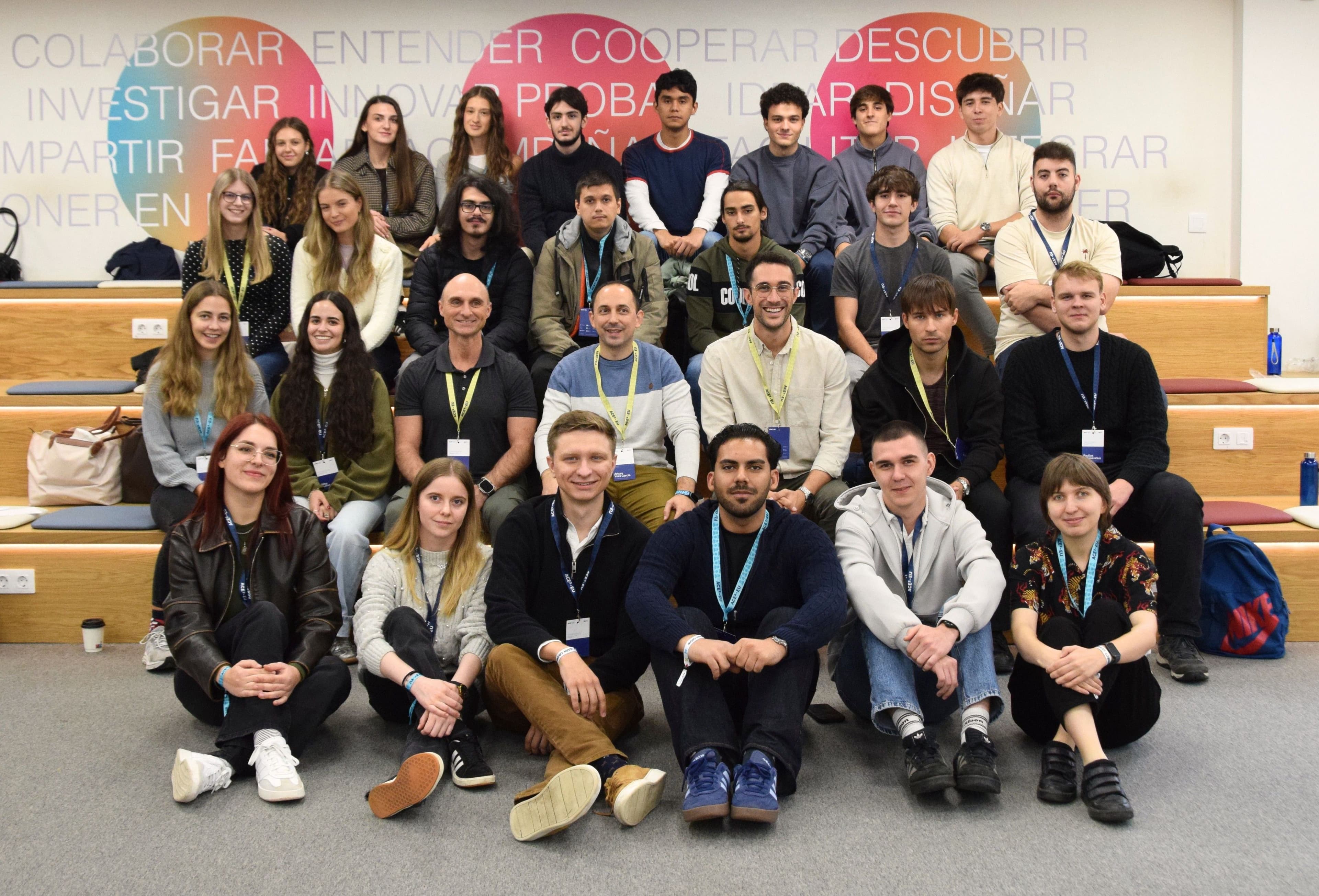
The Universidad Francisco de Vitoria (UFV) has held the 5th St. Albert the Great Conference, an event that connects the training of future scientists with biomedical research, entrepreneurship, and career opportunities in the field. Organized by the School of Experimental Sciences Under the theme “Science that Connects, Talent that Transforms,” the conference featured a researcher from the CSIC Ana Martínez Gil, whose career in new drug development has given students insight into the challenges of translating scientific discoveries into practical applications for society.
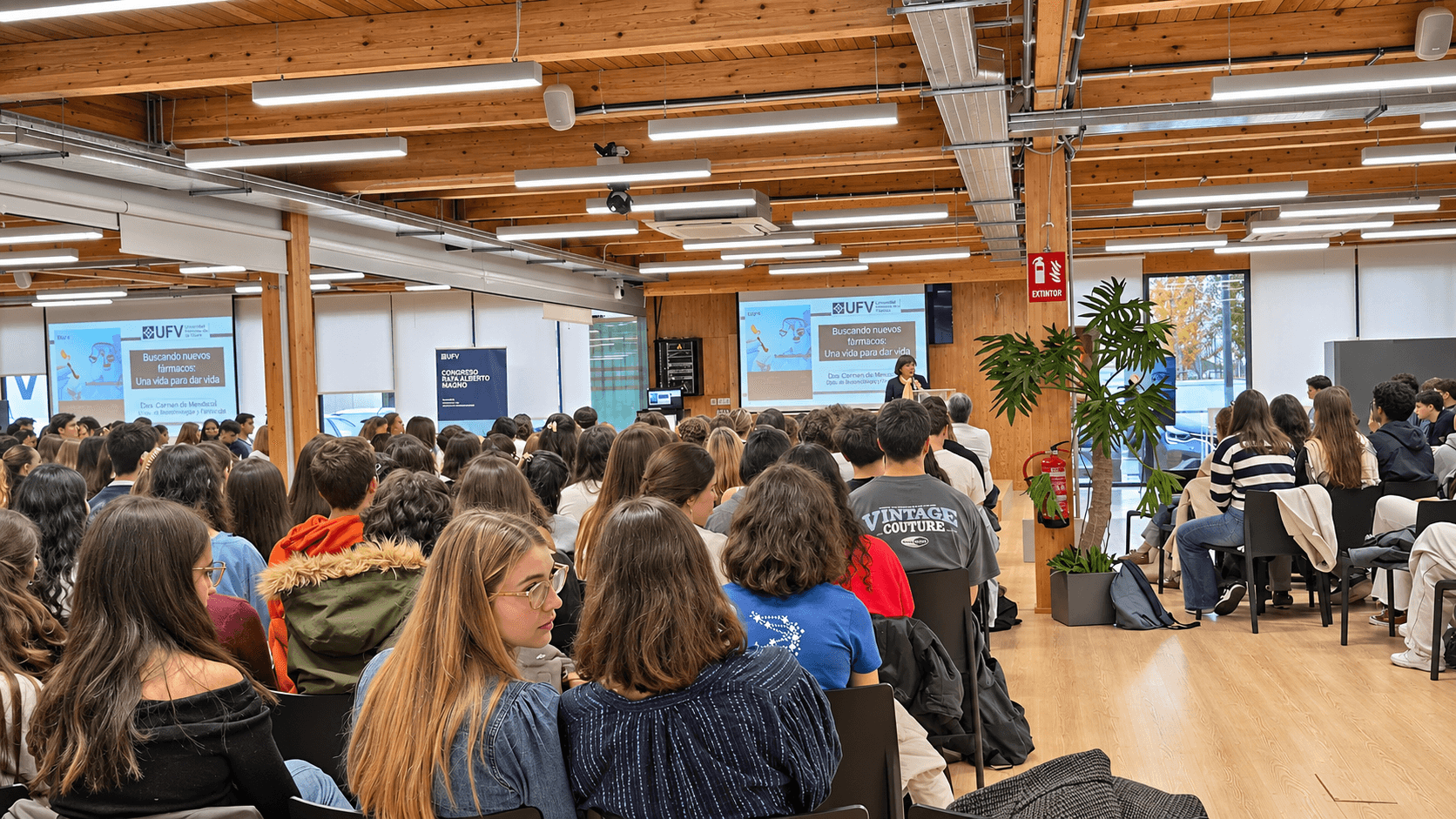
The participation of researchers and professionals, the presentation of scientific posters, and career guidance sessions are all part of an academic program that allows students to connect the knowledge they gain in their degree programs with various career opportunities. The event, held on the Pozuelo de Alarcón campus, also provides a space to share research and learn about research and technology transfer processes.
Martínez Gil, Research Professor at the Margarita Salas Biological Research Center of the CSIC, received the 2022 Juan de la Cierva National Research Award for his contribution to knowledge transfer. During his inaugural lecture, he shared insights gained from more than four decades dedicated to science, with a special focus on the search for treatments for neurodegenerative diseases such as Alzheimer's and amyotrophic lateral sclerosis (ALS).
From the Laboratory to the Development of New Treatments
The researcher's experience has enabled her to tackle one of the main challenges in biomedical research: ensuring that laboratory breakthroughs can be turned into treatments.
Martínez Gil explained the long road that lies between the initial findings of a study and its potential use in humans. This process requires years of work, funding, and collaboration, and involves overcoming technical challenges and dealing with results that do not always meet initial expectations.
His testimony has shown how important it is to keep the purpose of the investigation in mind throughout that process. The search for solutions for specific health needs guides the team's work and ensures continuity in their efforts when progress is slow to materialize.
For students, this approach helps them understand the relationships between basic research, drug development, and clinical practice. It also helps them understand the responsibilities of those who evaluate results and explore the possibilities of moving them on to new phases of research.
Teamwork as Part of Scientific Training
Collaboration among researchers, institutions, and companies was another key topic at the conference. “You can’t do this alone, It is done with a team", said Martínez Gil, acknowledging the contribution of the people who have supported her throughout her career.
This perspective ties in with the skills needed to carry out a scientific project, such as testing interpretations, sharing information, reviewing procedures, and clearly communicating conclusions. The specialized knowledge It applies to teams in which each professional contributes their expertise and assumes responsibilities.
Guiding Principles for Developing a Passion for Research
Martínez Gil shared some of the decisions and challenges that have shaped his career. His remarks offered an intimate perspective on how it is discovered and a commitment to science is maintained over time.
The researcher recalled the challenges she faced when trying to balance her professional development with her family life. She also highlighted the value of the support she received and a message that remains with her to this day: “Don't give up", because you have a place in this world."
Based on his experience as a scientist and mother of seven children, has encouraged students to believe in their potential and persevere in pursuing their goals. Her story has highlighted the role that support and personal role models play in academic and professional decisions.
The lecture also included a reflection on the relationship between her scientific work and her faith. Martínez Gil explained how observing the processes of life continues to inspire admiration in her and fuel the questions that accompany her work.
Scientific training and knowledge of career opportunities
The " programme " program for the 5th St. Albert the Great Conference included a roundtable discussion on entrepreneurship and orientation sessions designed to help students learn about the experiences of upperclassmen and talk with practicing professionals.
These proposals expand the range of resources that future scientists can use to guide their career paths. Understanding how research is conducted, what it takes to get started, and how knowledge is applied in different settings helps students make decisions about their specialization and entry into the profession.
Now in its fifth year, the conference continues to serve as an academic forum for the School of Experimental Sciences which brings together research, scientific communication, and career guidance. Interaction with specialists and student participation through their own projects help link university education to the methods, responsibilities, and social purpose of science.