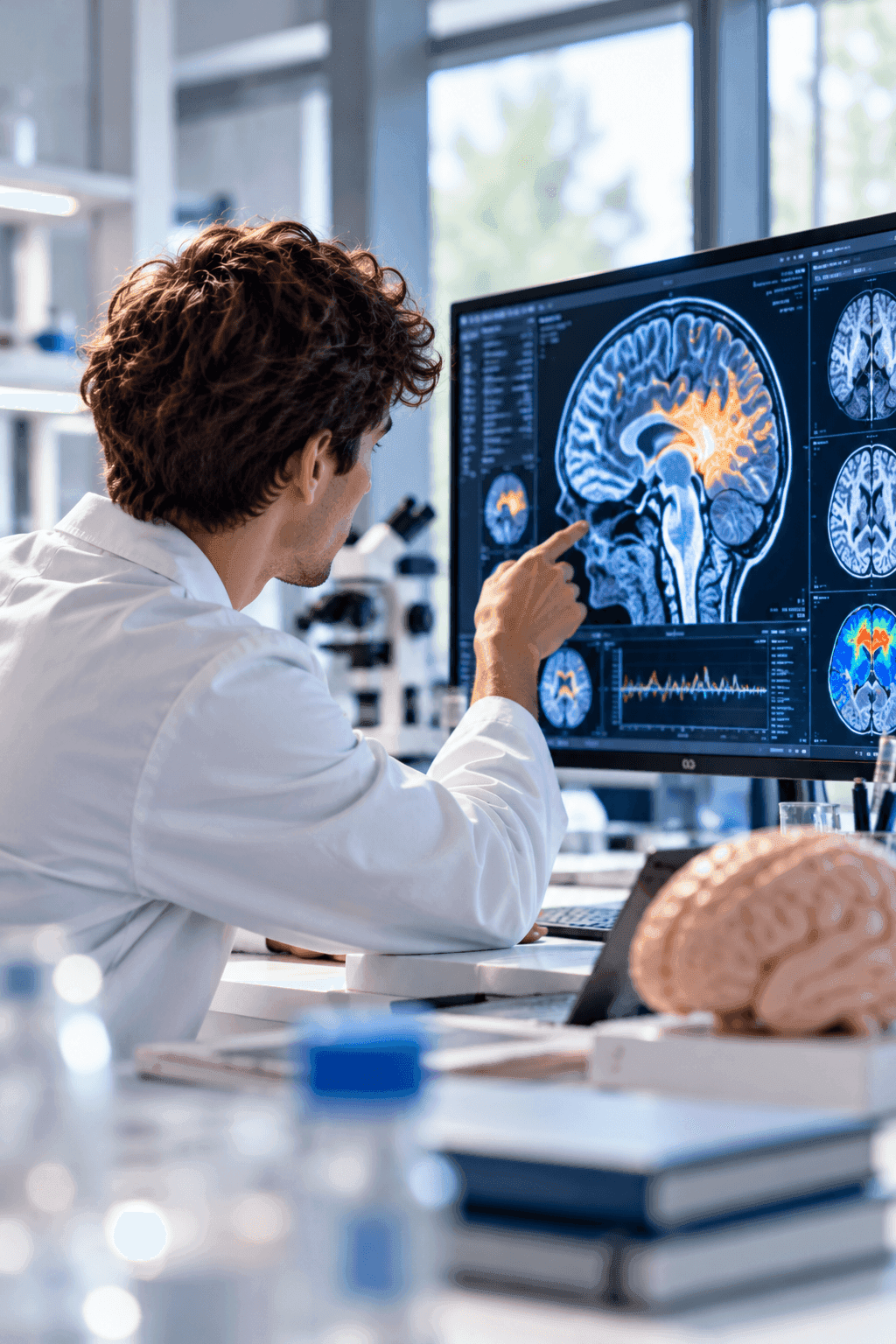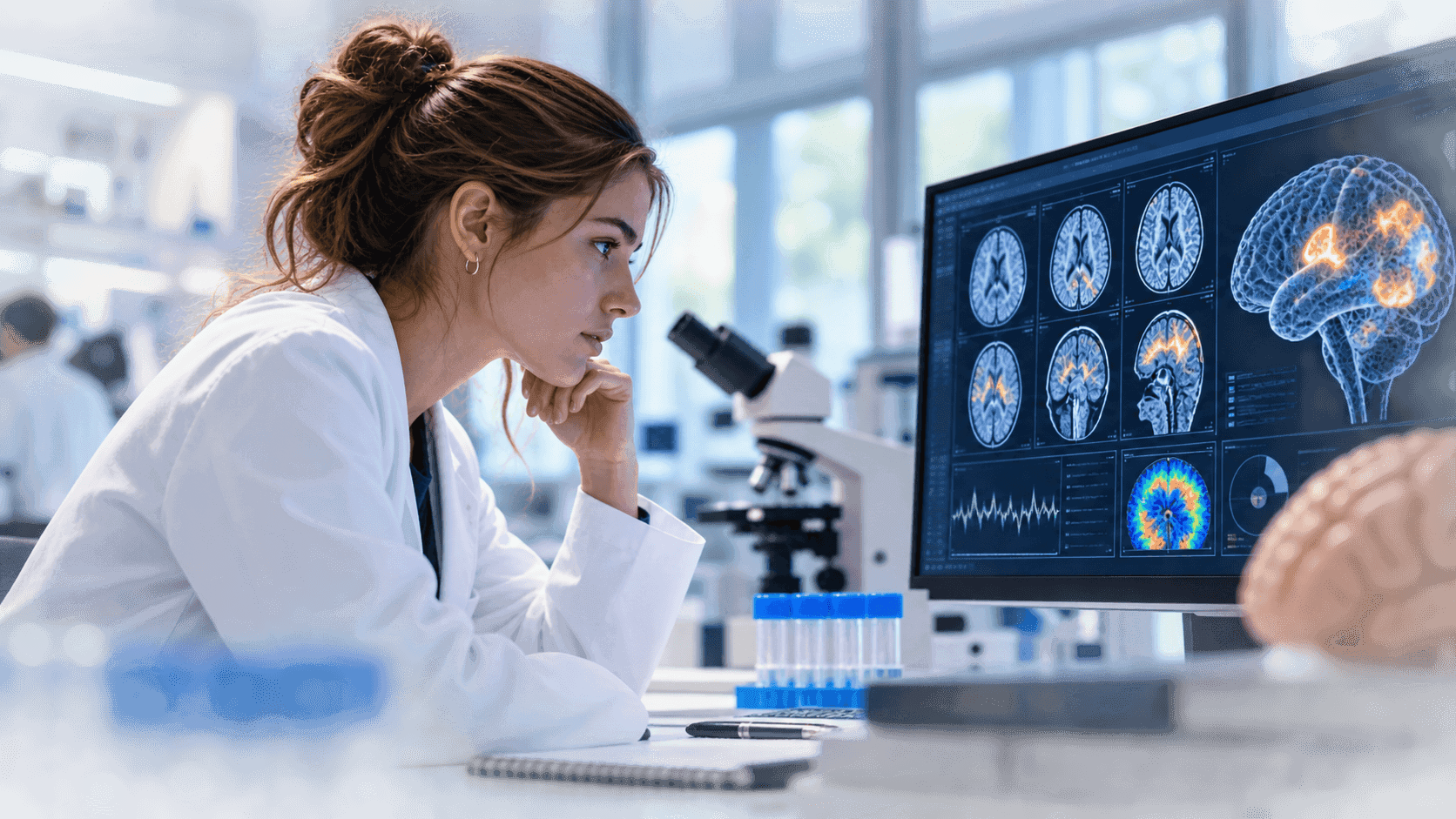


Neuroscience: Understanding the Brain and Shaping the Future
The UFV’s Master’s in Neuroscience ( Bachelor's Degree ) prepares you to understand how the nervous system works and to explore new ways of addressing major health challenges. You’ll learn to connect biology and clinical research with artificial intelligence, data analysis, and emerging technologies, through a program that brings together science, innovation, and critical thinking.
Its translational nature means you’ll learn to connect laboratory discoveries with their potential applications in diagnosis, treatment, rehabilitation, and improving quality of life. Its computational aspect incorporates the tools that are transforming biomedical research, such as programming, statistics, artificial intelligence, bioinformatics, and signal and image analysis. Thus, you’ll receive training at the intersection of the life sciences and technology, without having to choose between the two.
Over the course of the four years, you’ll be able to tailor your education toward two areas of specialization: the technological track, focused on neurotechnology, brain-machine interfaces, and neuroprostheses; or the clinical-translational track, focused on research into neurological diseases, mental health, and neurorehabilitation. All of this is approached from an international perspective, with instruction in English and a humanistic education that will help you put scientific knowledge to work for the benefit of people.
The degree program addresses the new challenges in research and health: from advances in neurological diseases and mental health issues to the possibilities opened up by artificial intelligence, neuroimaging, neurotechnology, and precision medicine. This is a scientific field with international reach in which it is becoming increasingly important to understand the nervous system, interpret the data it generates, and develop technologies capable of studying and intervening in it.