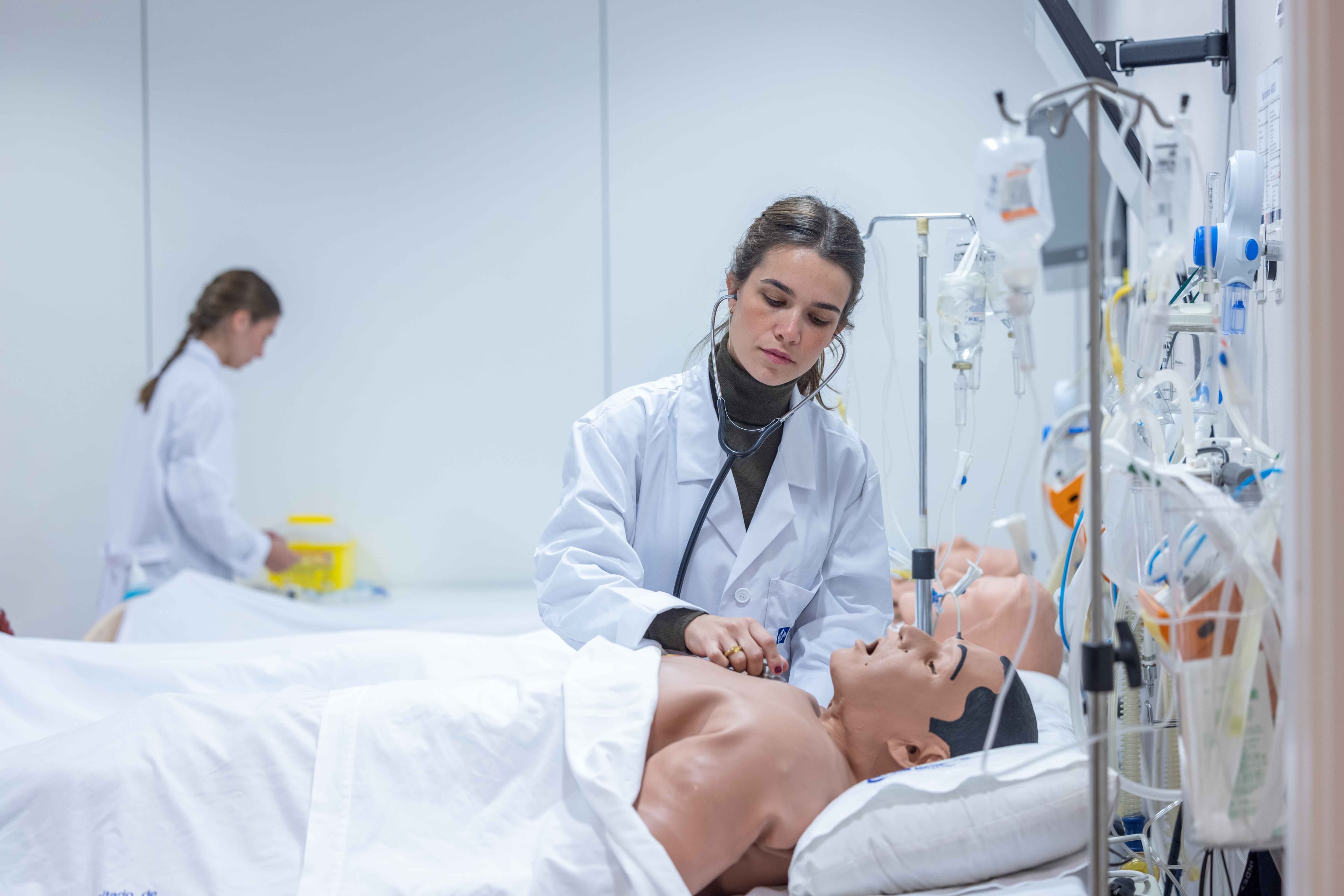
Healthcare education today faces a challenge that goes beyond technical expertise: training professionals capable of diagnosing, treating, and supporting real patients in situations of high clinical, emotional, and human complexity. In this context, Francisco de Vitoria University has established its own model of simulated patients that reinforces one of the key pillars of its educational approach in Health Sciences and other degree programs: placing the person at the center of care.
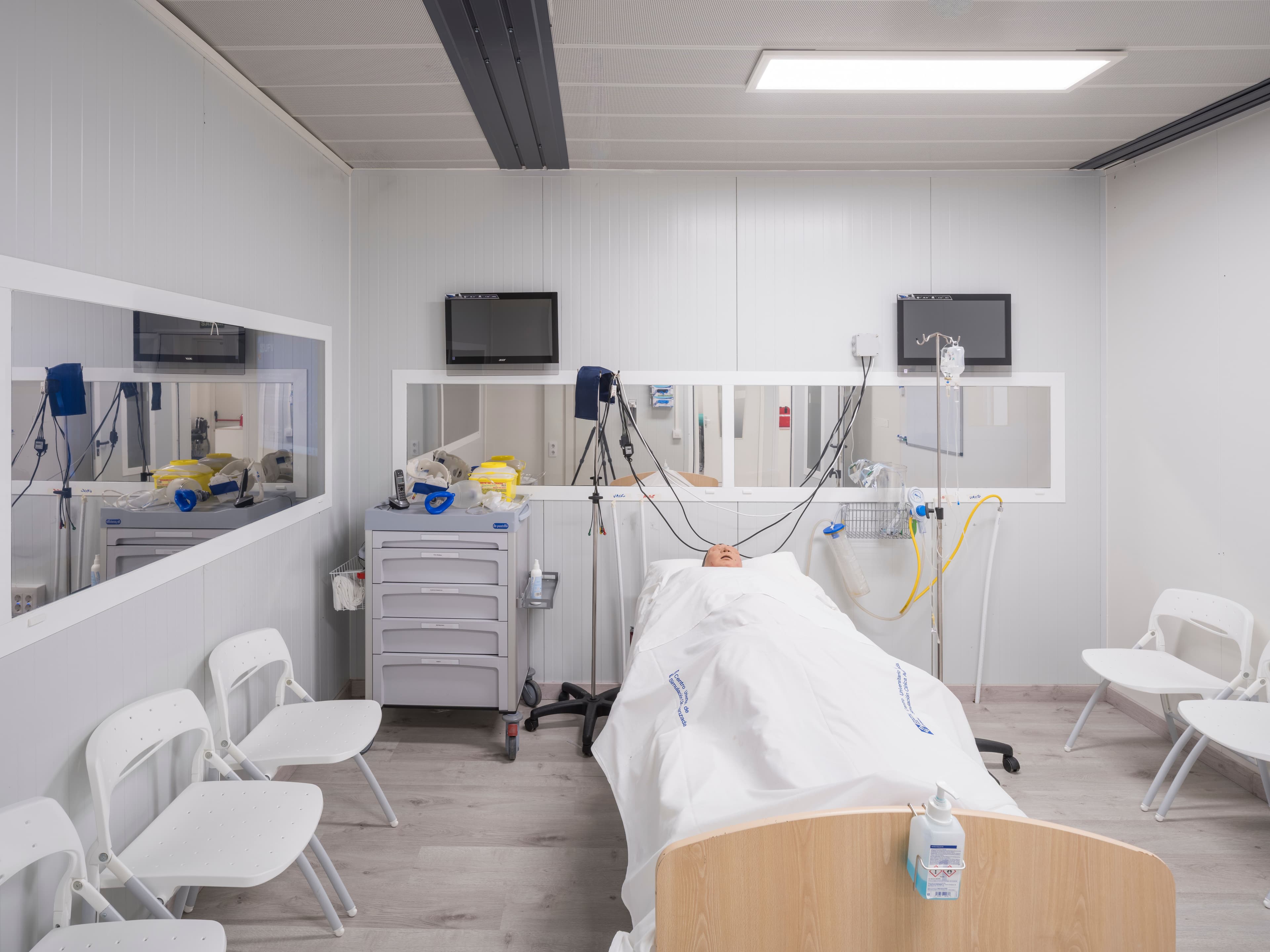
The UFV Center for Advanced Clinical Simulation works with simulated patients and has developed a programme in the field, structured and aligned with international standards. The model does not merely recruit individuals to portray clinical cases; rather, it trains, supports, and empowers them to actively participate in the educational process.
Medicine, Nursing, Physical Therapy, Dentistry, Psychology, CAFYD, Criminology, Dietetics and Nutrition, Occupational Therapy, and Social Work are some of the degree programs that incorporate the simulated programme into their curricula.
The difference lies not only in the use of simulated patients—a methodology that is becoming increasingly widespread in universities and healthcare centers—but also in having programme , progressive, and programme aligns with the international standards of best practices set by ASPE (Association of Standardized Patient Educators), one of the leading international organizations in this field. This approach makes the simulated patient an active part of the teaching and clinical simulation team, bringing rigour , consistency, and quality to students’ practical learning.