
The Bachelor's Degree Computer Engineering from the Universidad Francisco de Vitoria (UFV) held its first Discovery Week, an initiative that integrates programming, critical thinking, and business challenges into the training of future engineers. The students have worked on problem analysis, solution development, and results evaluation—skills necessary for using artificial intelligence with rigour and professional judgment.
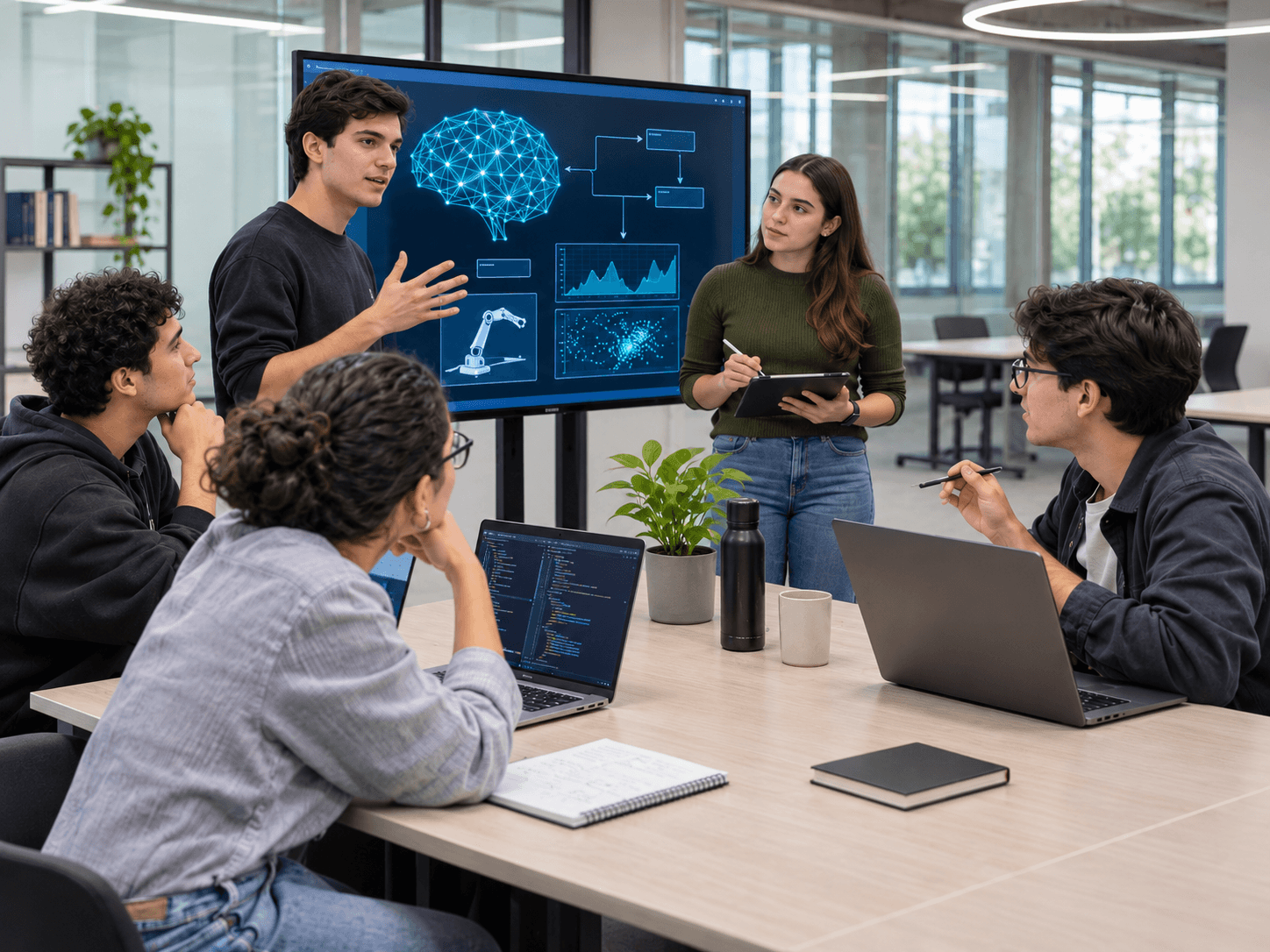
The proposal, developed by the Faculty of Engineering (EPS), adapts the activities to the different stages of the grade level. The curriculum ranges from algorithmic thinking and programming to challenges posed by companies in the final years of the program, with opportunities to apply their knowledge, work as part of a team, and present their proposals to professionals.
This experience is part of the Computer Engineering Bachelor's Degree 's curriculum at UFV, which also offers the opportunity to pursue specialization diplomas in artificial intelligence applied to robotics or cybersecurity and hacking ethical. The degree program thus combines the technological specialization with practical experiences that require analyzing alternatives, explaining decisions, and assessing their consequences.
Technical skills and intellectual independence for working with AI
The use of artificial intelligence in technological development requires knowledge that enables one to understand and evaluate its results. For a future engineer, this involves analyzing the conditions of a problem, recognizing the limitations of a proposal, and verifying whether it addresses the identified need.
Throughout the week, the students have practiced algorithmic thinking in The Compass of Intelligence. The competitive programming workshops associated with the AdaByron contest have allowed them to deal with problems that require reasoning and the application of programming skills. They have also participated in 3D printing activities and in The Art of Thinking, an experience focused on critical thinking.
These practices are in line with UFV's goal of fostering intellectual autonomy and independent judgment alongside technical training. Understanding the tools It allows you to use them and understand how they work. Evaluating your answers requires verifying the information, recognizing errors, and justifying your decisions.
The ability to learn continuously is part of this preparation. As technology evolves, it becomes necessary to keep our knowledge up to date and to assess what each tool contributes to the work we want to do.
Understanding the needs before developing a solution
The week featured innovation activities using the methodology Design Thinking and a rural entrepreneurship experience, in which students have developed and presented technological proposals to address real-world challenges.
This course connects programming and solution design with the understanding of needs of those who will use them. Listening, analyzing the context, and precisely defining the problem help guide the technical work and assess the usefulness of the proposal.
Students must apply their knowledge to the circumstances of the challenge and explain the reasons behind their decisions. In this way, they become familiar with the responsibilities typical of development teams, where technical feasibility must be evaluated alongside user needs and conditions of use.
Business Challenges in Applying and Testing Knowledge
Third- and fourth-year students have participated in a hackathon as part of the Entrepreneurship and Innovation course. Over the course of several days, they worked in teams to develop solutions to real-world challenges, using an approach similar to project-based work in a professional setting.
The event featured Hacking Bridge, the UFV Entrepreneurship Center, and participating companies, who have posed challenges, supported the teams, and evaluated their final proposals.
Collaborating with professionals allows students to receive an external evaluation and ensure that their work aligns with the needs of organizations. The final presentation requires students to present their proposal and explain how it addresses the challenge at hand.
This contact also provides insights into the professional requirements of the industry and the importance of clearly explaining the value of a technological solution.
Human Competencies in Engineering Education
Learning based on current challenges requires coordinating contributions, distributing responsibilities, and reaching agreements. Active listening, the communication and the ability to collaborate play a role in the development of the solution and in the operation of the equipment.
Understanding a different perspective, sharing information, or explaining a challenge are actions that enable progress when a problem requires integrating different types of knowledge. Trust and individual responsibility therefore have a specific application in technology-related work.
The Faculty of Engineering It integrates these skills into experiences in which students must apply and demonstrate what they have learned. Discovery Week combines technical training, professional guidance, and reflection on the implications of technology. Through this, the degree program prepares future engineers to use new tools knowledgeably, maintain their independent judgment, and be accountable for their decisions to individuals and organizations.