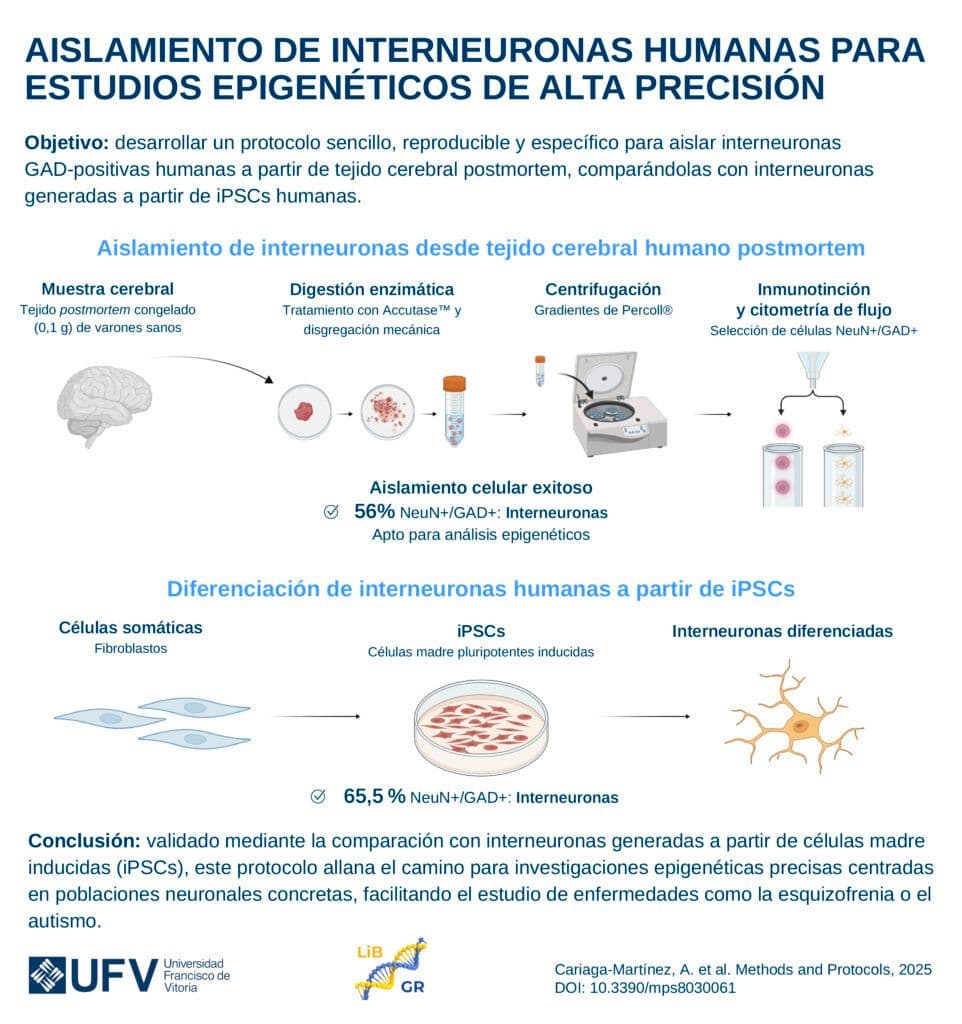
The tool will enable researchers to investigate how factors such as stress or the environment affect the brain in schizophrenia, autism, or obsessive-compulsive disorder (TOC).
What happens in the brain of a person with schizophrenia or autism? Until now, it was almost impossible to find out directly. Most studies were conducted using animal models or peripheral tissues, such as blood or saliva, which do not accurately reflect what happens in the human brain.
Now, a team of Spanish scientists has developed a simple, cost-effective, and reproducible technique that allows researchers to isolate and directly study the neurons involved in these disorders.
The protocol focuses on GABAergic interneurons, cells that are essential for maintaining the balance between excitatory and inhibitory activity in the brain. Their dysfunction has been linked to conditions such as schizophrenia, obsessive-compulsive disorder (TOC), and autism spectrum disorders.
The new technique makes it possible to obtain these neurons from small samples of postmortem human brain tissue, without the need for sophisticated equipment. This opens the door to studying, for the first time in a direct and accessible way, how factors such as the environment, stress, or life experiences alter these key cells.