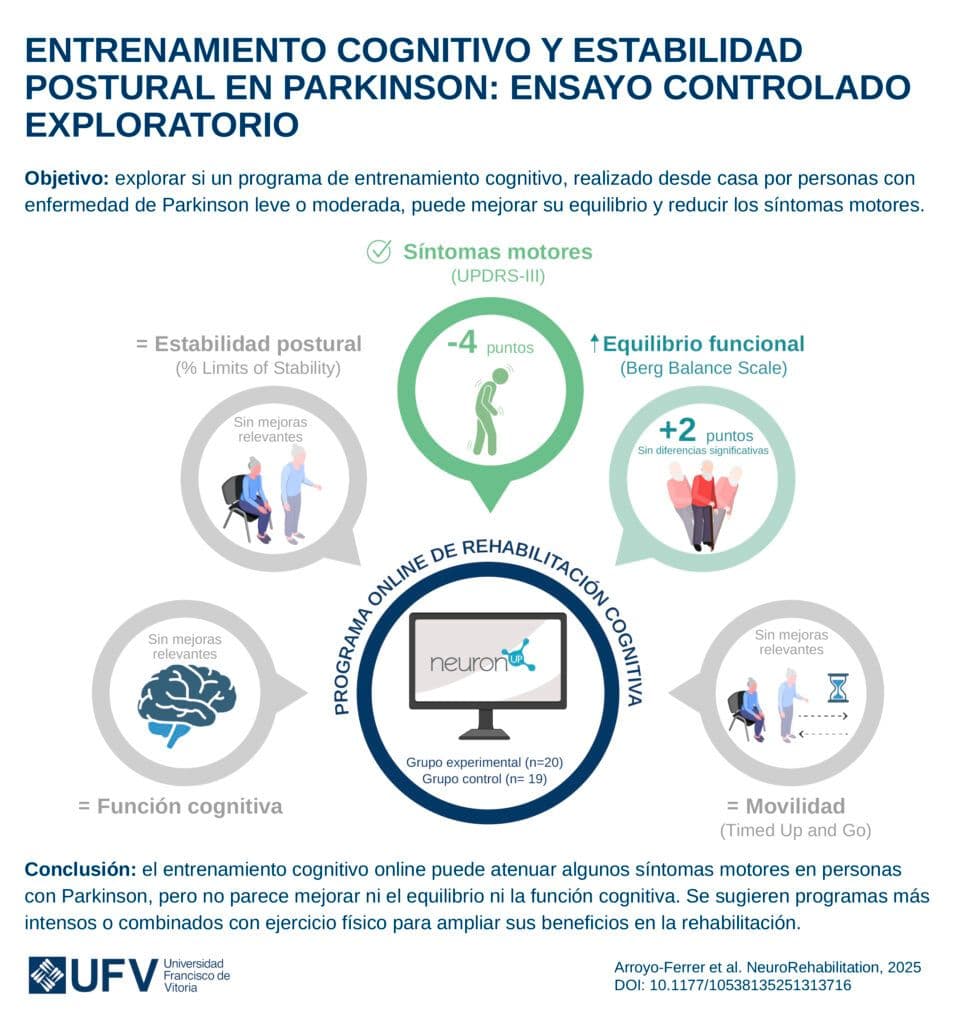
A Spanish study shows that cognitive training at home, without physical exercise, can improve mobility in people with mild or moderate Parkinson's disease.
Parkinson's disease affects more than 10 million people worldwide. In addition to tremors and muscle stiffness, those living with the disease face a progressive loss of mobility, slowness of movement, balance problems, and, often, a decline in attention and mental alertness on a daily basis.
This combination of symptoms directly affects their quality of life, limiting their independence and placing a heavy emotional and practical burden on both patients and their families.
Faced with this challenge, a team of Spanish researchers has explored an innovative approach: training the brain to improve physical health, without leaving home.
According to a study published in the scientific journal NeuroRehabilitation, the digital tool NeuronUP, used in a self-administered cognitive programme at home, significantly reduced certain motor symptoms of Parkinson's disease in people with mild or moderate stages programme the condition.